Cabin floors live a harder life than any floor in town, which is why I won't lay anything that can't take it, the durable luxury vinyl plank I use runs about $3 to $7 a square foot. Muddy boots come straight off the trail, a wet dog shakes off by the stove, firewood gets dropped, and grit walks in on everyone's feet. A precious floor in a cabin is a floor you'll resent within a month. So I choose cabin flooring for what it survives first and how it looks second. And the good news is you can have both. Here's what goes down.
Choose for Abuse First
The mental shift with cabin floors is to choose for abuse before beauty. A floor that can't take mud, water, scratches, and dropped tools is the wrong floor for a cabin no matter how good it looks in a photo. So I start every flooring decision with durability, what will this survive?. And only then ask whether it looks right. Get that order backwards and you're refinishing or replacing within a couple of seasons.
Mid-Tones Hide Everything
The single best trick for cabin floors is a forgiving mid-tone. Very pale floors show every speck of mud and every paw print; very dark floors show dust and scratches just as badly. A warm mid-tone wood colour hides dirt and wear between cleans and still photographs beautifully. In a working cabin, a floor that hides a little grit is a floor you'll actually enjoy living on.
Real Wood Where You Live
In the main living and sleeping areas, I like solid or engineered wood in a durable mid-tone, warm underfoot, right for a cabin. And able to be refinished down the road. Sealed well and chosen in a forgiving colour, it takes cabin life and ages gracefully, picking up the kind of honest wear that actually looks good in a cabin. Wood is the heart of a cabin floor where it can survive.
LVP Where It's Wet
In the entries, kitchen, and bathroom, the mud-and-water zones. I switch to quality wood-look luxury vinyl plank. It's water-resistant, scratch-resistant, warm-looking, and wipes clean, so it shrugs off exactly the abuse those areas get. Mixing real wood in the dry living areas with tough LVP in the wet zones gives a cabin the best of both: warmth where you sit, bulletproof where you track in mud.
Stone and Tile by the Stove and Door
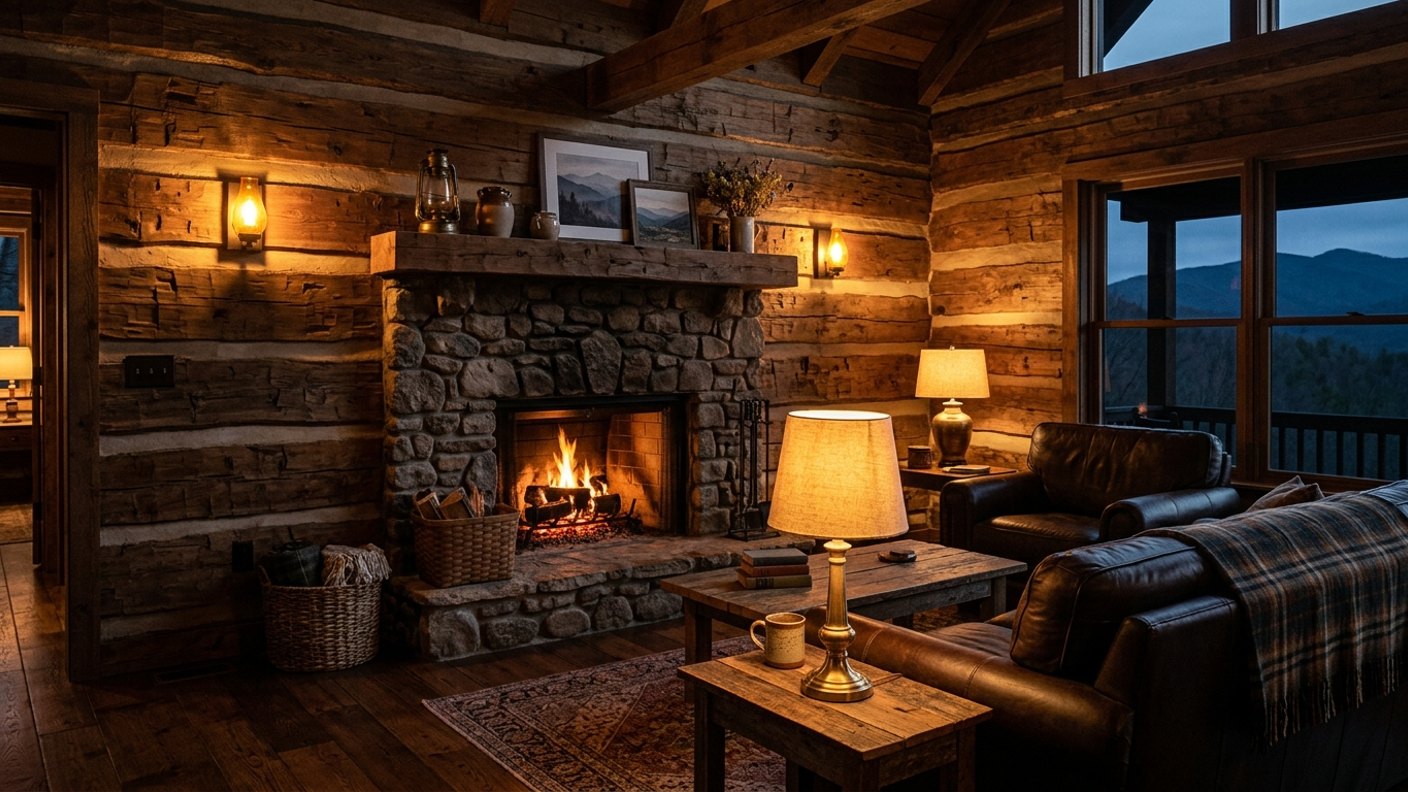
By the wood stove and the main entry, I'll often use stone or tile, fireproof and spark-proof at the hearth, indestructible at the door where the worst of the mud lands. They're cold underfoot, so I keep them to those specific zones rather than whole rooms. A stone hearth surround and a tiled boot zone handle the toughest jobs in the cabin and look completely at home doing it.
A Serious Boot Zone
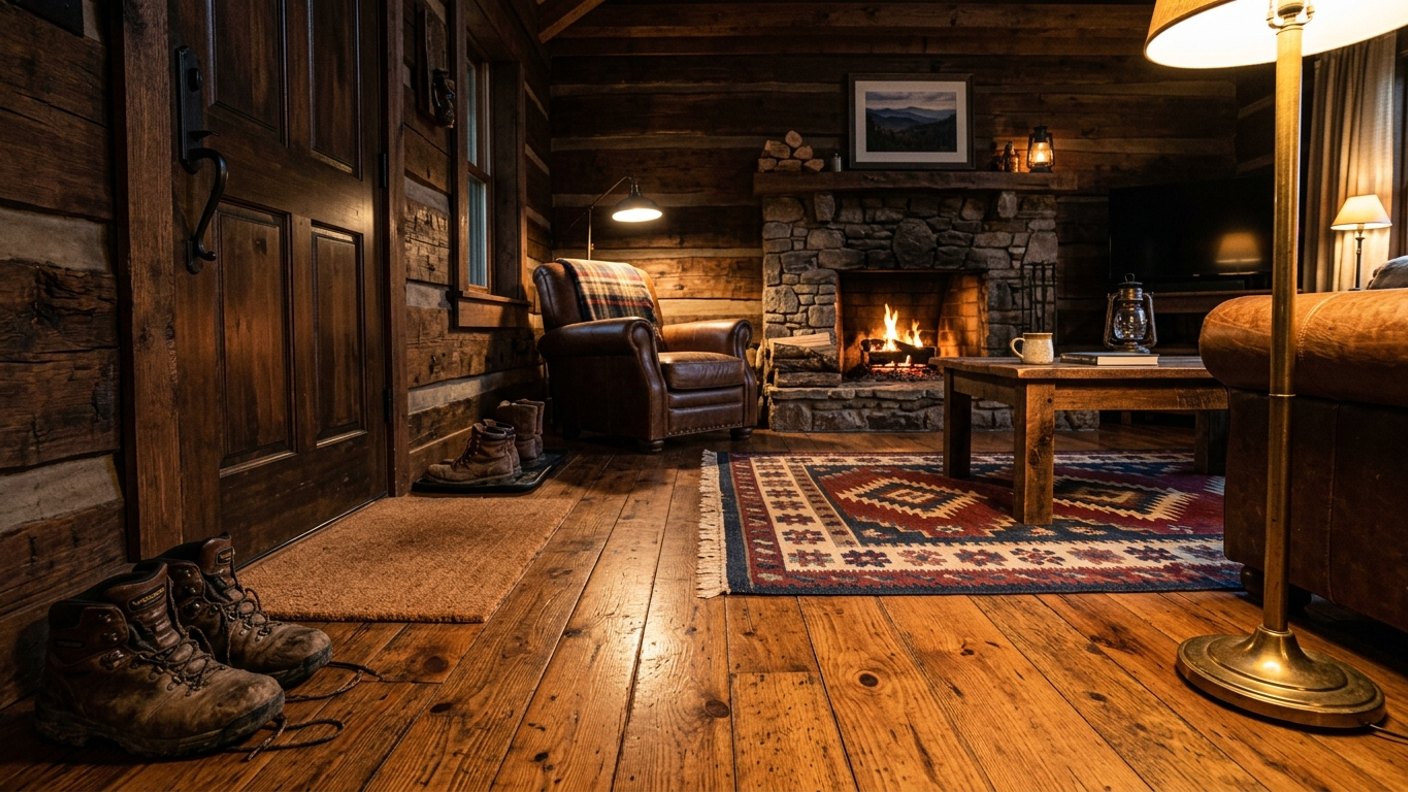
The cheapest thing that protects every other floor is a proper entry, a durable surface, a good boot scraper and mat, a place to drop wet gear and muddy paws before they reach the wood. Most cabin floor damage walks in through the door, so stopping it at the threshold does more than any finish. A serious mudroom-style entry zone is the unglamorous hero of cabin flooring.
Rugs You Can Throw in the Wash
Over the hard floors I layer durable, washable rugs in mid-tones that hide dirt, warmth underfoot, softness, zoning in an open plan, and protection in the high-wear spots. The key word is washable, because cabin rugs see mud and dog. A tough rug you can clean and eventually replace cheaply is the right kind; a precious one you're afraid to step on with boots is not.
Light It to Show the Grain
Good cabin floors deserve warm light raking across them to bring out the grain and warmth. A floor lamp in the corner and a warm wood pendant overhead make the wood glow in the evening, where cool overhead light makes even a beautiful floor look flat and grey. Durable floors and warm lighting are a pair. The floor takes the abuse, the light makes it look like a million bucks anyway.
Gear & lighting in this post: floor lamps for the living room and a wood pendant