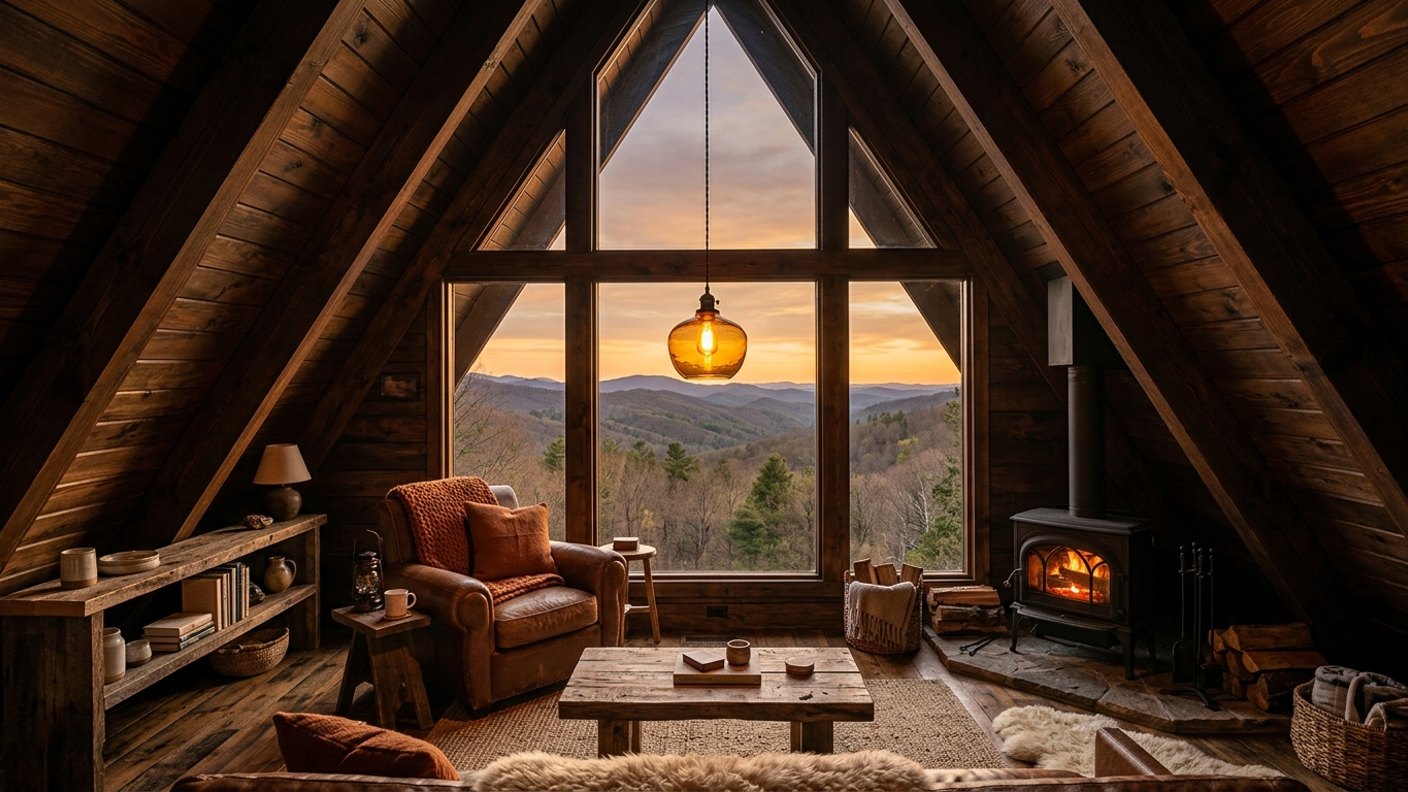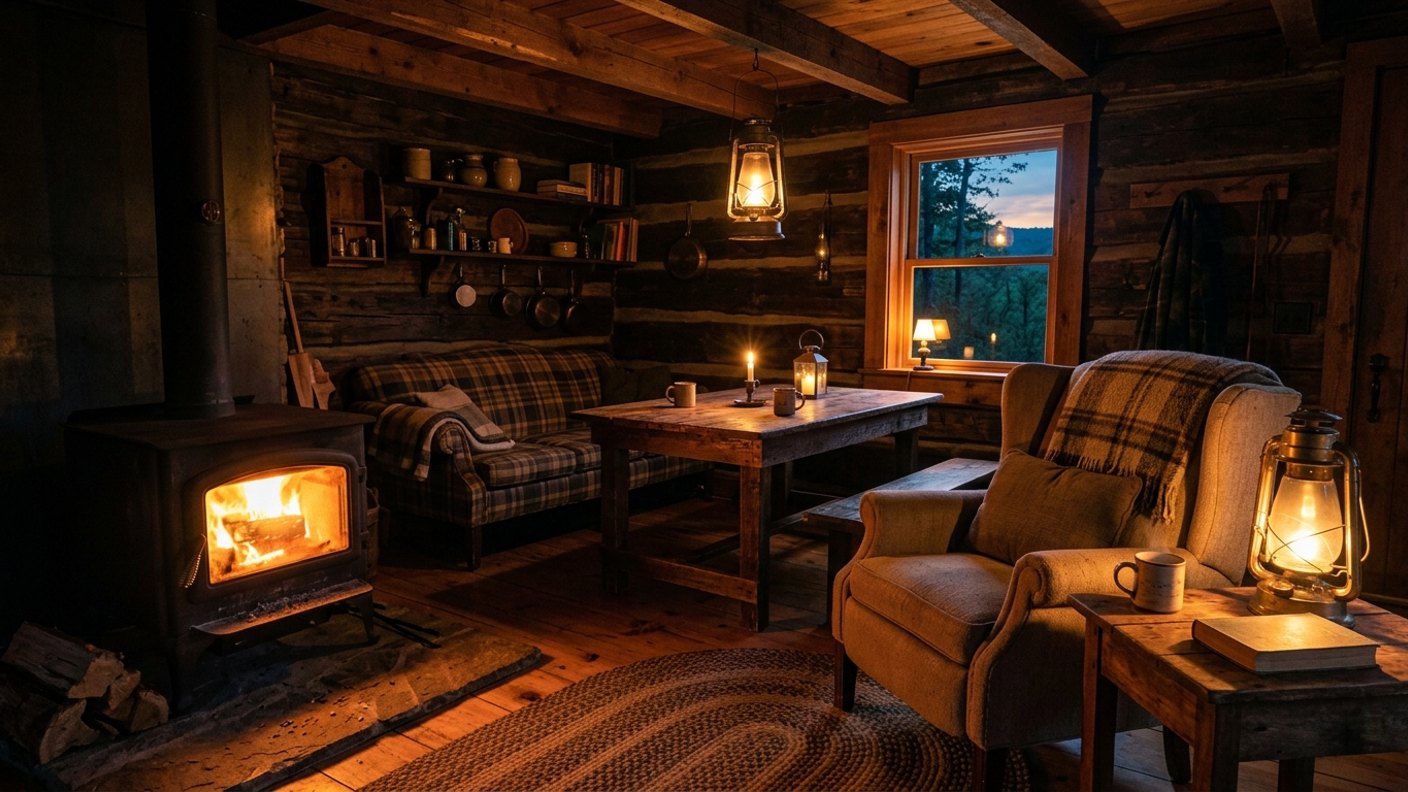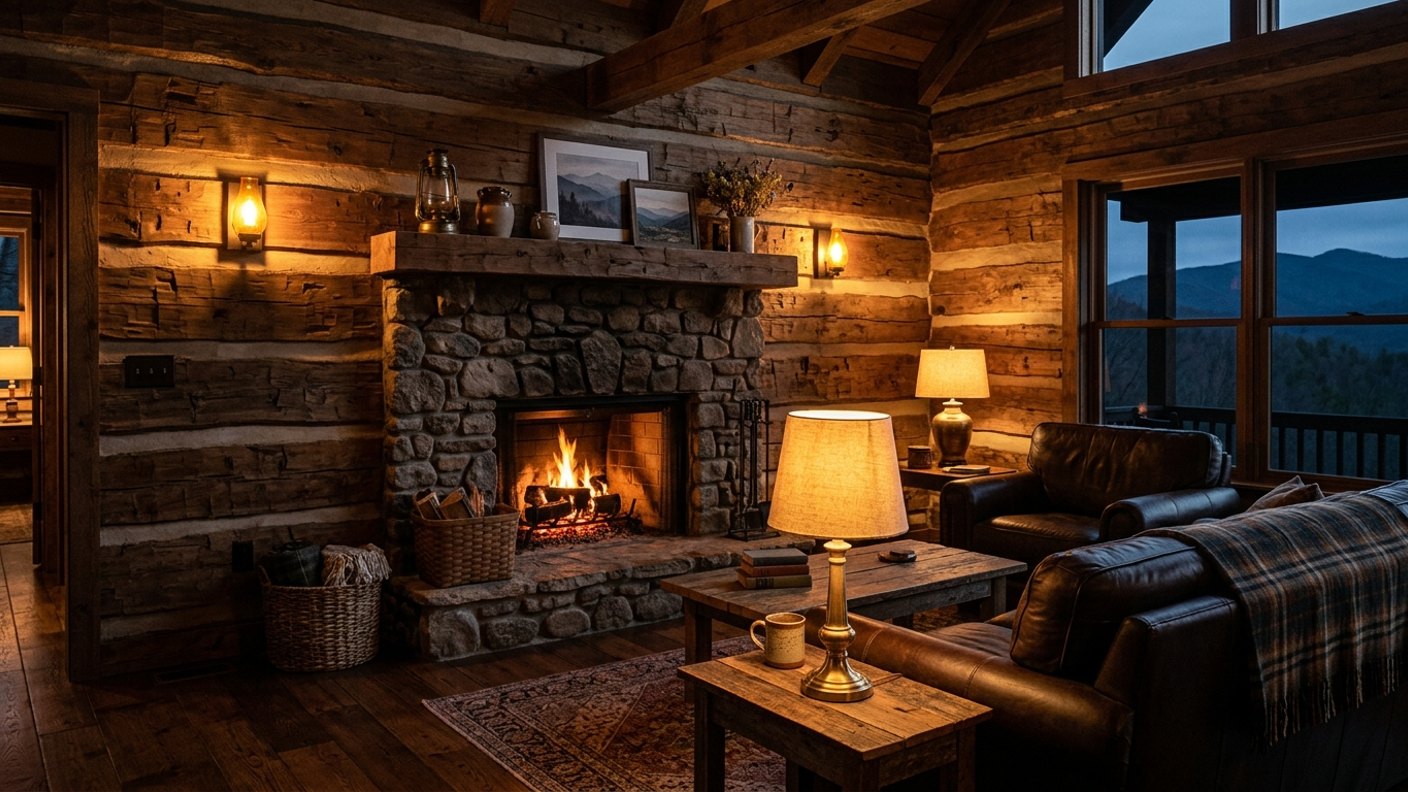
The single fastest way to ruin a log cabin is to renovate it like it's a normal house. I've watched people buy a beautiful old log cabin and then drywall over the logs, paint everything greige. And wonder why it feels like a dentist's office in the woods. Renovating a log cabin interior is mostly an exercise in restraint, updating what's tired without sanding away the exact thing people came up the mountain for. Here's how I do it.
Keep the Logs. Always.
The logs are the product. They're why a cabin is worth more than the same square footage in town, and covering them is the one mistake you can't easily undo. So rule one is that the logs, the beams, and the stone hearth stay. Everything else is on the table, but those are the bones of the character, and the whole job is built around showing them off, not hiding them.
Update Systems, Not Soul
What I do change is the stuff that's tired or impractical. The wiring, the plumbing, a failing kitchen, a grim bathroom, dark dated flooring, and bad lighting. These you can modernize freely, because nobody fell in love with the 1980s vanity. The art is drawing the line between authentic character (keep) and dated inconvenience (fix). Update the systems and the eyesores; leave the soul.
Lighten Around the Logs
The reason old log interiors feel like caves is that wood absorbs light instead of bouncing it. So rather than painting the logs, I lighten everything around them. The ceiling between the beams, any non-log walls, the floors. So the logs read as a warm feature against a brighter backdrop. If the logs themselves have gone dark and orange with age, I'll clean and re-finish them to a warmer, mellower tone rather than cover them.
Lighting Is the Whole Game
Here's the thing it took me too long to understand: a wood interior needs roughly twice the light a painted one does to feel bright. And one ceiling fixture won't cut it. I layer warm light, wall sconces right on the log walls at eye level, a wood pendant over the table, and lamps in the corners, all warm 2700K. That layering is what makes dark logs glow instead of loom. It is the cheapest, biggest improvement you can make to a log cabin.
Sconces on Log Walls
Wall sconces are a log cabin's best friend specifically because log walls have no room for, and look wrong with, a lot of fussy fixtures. A simple warm sconce mounted right on the logs throws light up and down the wood, catching the grain, and reads completely at home. Where the wiring won't reach, plug-in and rechargeable versions do the same job with no chasing into a log wall, which you don't want to do anyway.
Floors and Soft Stuff
I update flooring to something warm and durable that can take cabin life, and then bring in wool, leather, and texture. The soft layers that make a log interior feel lived-in rather than like a museum. These are easy, reversible changes that modernize the comfort without touching the character. A good rug and warm textiles do a lot of quiet work in a log cabin.
Resist the Trend
The hardest part is resisting whatever's trending. Modern farmhouse, all-grey, sleek minimalism. They all fight a log cabin and date fast on top of it. A log cabin already has a timeless look; your job is to support it, not override it. When I'm tempted to do something clever, I remember that the building has been right for decades and I'm the temporary one.
The Test
My test for a finished log cabin interior is simple: does it feel more like itself than before, or less? If the logs glow, the rooms are warm and well-lit, the practical stuff works, and it still unmistakably reads as a log cabin. I did my job. If it could be any house anywhere, I went too far. Renovating a log cabin well means almost nobody can tell exactly what you changed.
Gear & lighting in this post: warm wall sconces and a wood pendant light