Seven cabins in, I've bought a lot of tools. Some I'd run back into a burning cabin for, some that were a flat waste of money. Across seven projects I've easily sunk $4,000 to $5,000 into the kit. People starting out always overspend on the wrong things and underspend on the right ones, because nobody tells them which is which. So here's the honest list: the tools I'd buy again in a heartbeat, the ones I regret, and how to build a cabin kit that actually earns its keep.
Buy Quality on What You Use Daily
The single best tool-buying rule I've learned: spend on what you use constantly, save on what you rarely touch. A quality everyday drill or saw lasts, works better, and is safer; a cheap one fails exactly when you need it, which on a cabin is usually far from a hardware store. Conversely, a premium version of a once-a-year specialty tool is money tied up gathering dust. Match the spend to the use.
The Cordless Drill Earns Its Keep
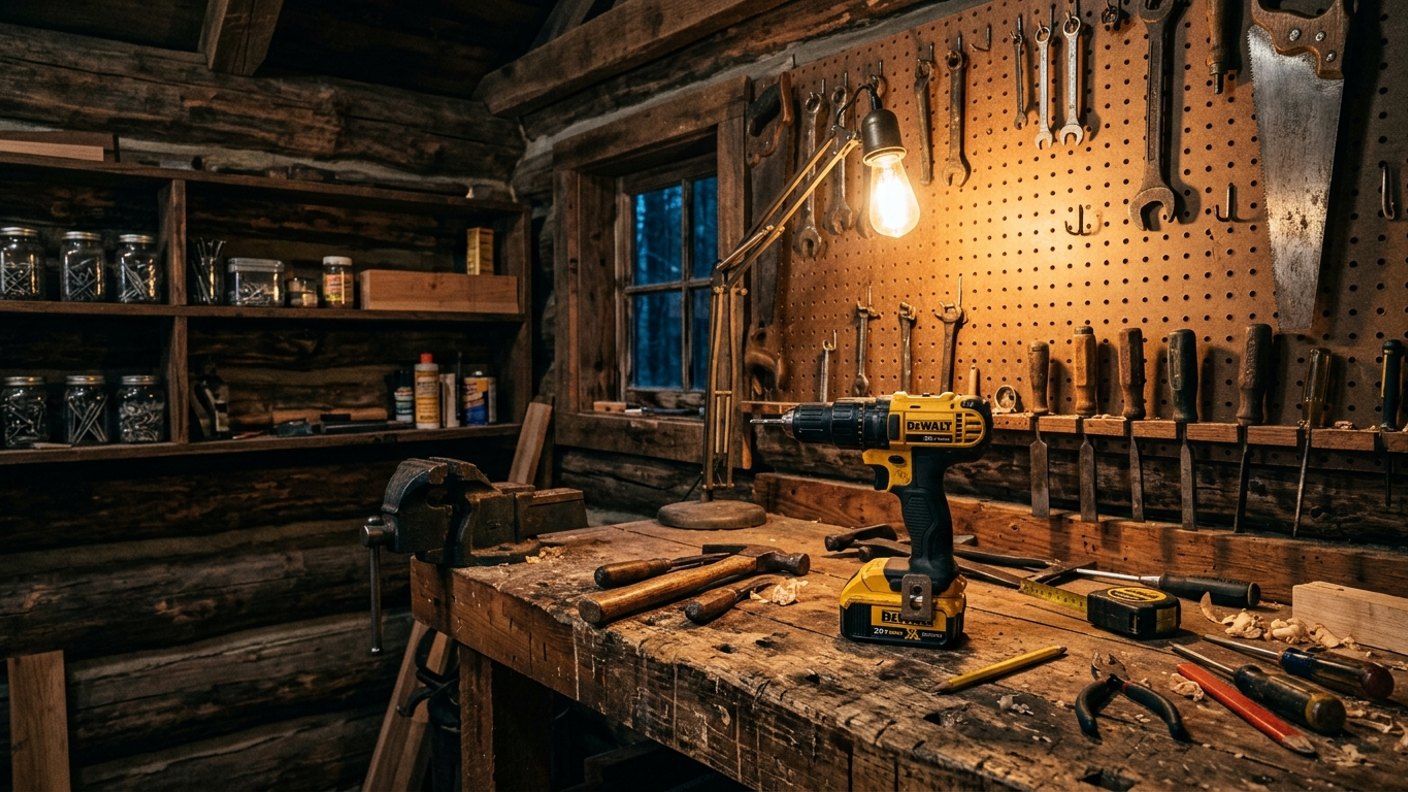
If I could keep one power tool, it's a good cordless drill/driver. It's the workhorse of every cabin renovation, assembly, drilling, driving, a hundred jobs a day. A quality one with good batteries is worth every penny and then some. I've never once regretted buying the better drill, and I've cursed every cheap one I tried to save money on. This is the tool to spend on without hesitation.
A Circular Saw, and a Good Handsaw
Close behind is a quality circular saw for all the cutting a cabin demands, and, less obviously, a good handsaw for the precise, quiet, no-power jobs, which on an off-grid cabin is a lot of them. The handsaw surprises people; in a cabin with limited power, a sharp hand tool you can use anywhere is worth more than another gadget that needs charging. Both have earned their place many times over.
Don't Skimp on Lighting
The most underrated essential isn't a power tool at all. It's good light to work by. You can't do careful, safe work in a dark cabin, and cabins are dark with limited power mid-renovation. A bright, portable, rechargeable work light you can move to wherever you're working is as essential as any saw, and it's the thing beginners forget. Even later, plug-in lighting makes finishing work far easier. Light is a tool.
Good Hand Tools and a Level
A solid set of quality hand tools, a reliable level, and good measuring and marking tools form the quiet backbone of cabin work, and they last decades. These aren't exciting and nobody brags about them, but cheap versions are frustrating and inaccurate, and accuracy matters. I'd buy the quality hammer, level, and tape again every time; the throwaway ones I bought early are long gone. Invest in the boring basics.
Safety Gear, Always
Eye and ear protection, a good dust mask, gloves, sturdy boots. The cheapest insurance there is, and the tools I most regret skimping on early. Cabin work is hard on a body, and an injury far from help is a serious problem, not an inconvenience. I never regret buying safety gear and I've regretted not wearing it. This is non-negotiable, and the spend is trivial against what it protects.
The Regrets
My biggest tool regrets are the expensive specialty tools I bought for one job and never used again, gear that would have been far cheaper to rent or borrow. The thrill of owning every tool led me to tie up money in equipment that sits idle most of the year. I also regret the cheap versions of daily tools, which I just had to rebuy in quality anyway. Both mistakes came from buying for the fantasy, not the actual work.
Build It Over Time
You don't need every tool on day one. I built my kit over years and cabins, buying quality on the everyday tools as I learned what I actually used, renting the rare specialists. And replacing the cheap early mistakes once. That's the sane way to do it, let the real work tell you what to buy, spend where it earns out. And resist the urge to own a wall of tools you'll never touch. A lean, quality kit beats a big idle one every time.
Gear & lighting in this post: a rechargeable work light and plug-in wall sconces