Nobody grows up planning to renovate cabins for a living. Seven cabins and about six years later, here I am. I certainly didn't. I had a desk, a commute, and a life that looked fine on paper right up until it wasn't. The honest story of how I ended up doing this starts at the worst point, not the best, which is probably why people ask about it. Here's how a divorce, a dead-end job, and a falling-down A-frame turned into an actual life.
The Life That Fell Apart
For nineteen years I had the standard package. The marriage, the mortgage in the suburbs, the job I didn't love but didn't question. When the marriage ended, the whole structure went with it, and I found myself with no clear idea who I was without those things. I won't dress it up: it was the worst stretch of my life. And I had no plan, just a lot of time alone and a need to do something with my hands.
A Cabin I Had No Business Buying
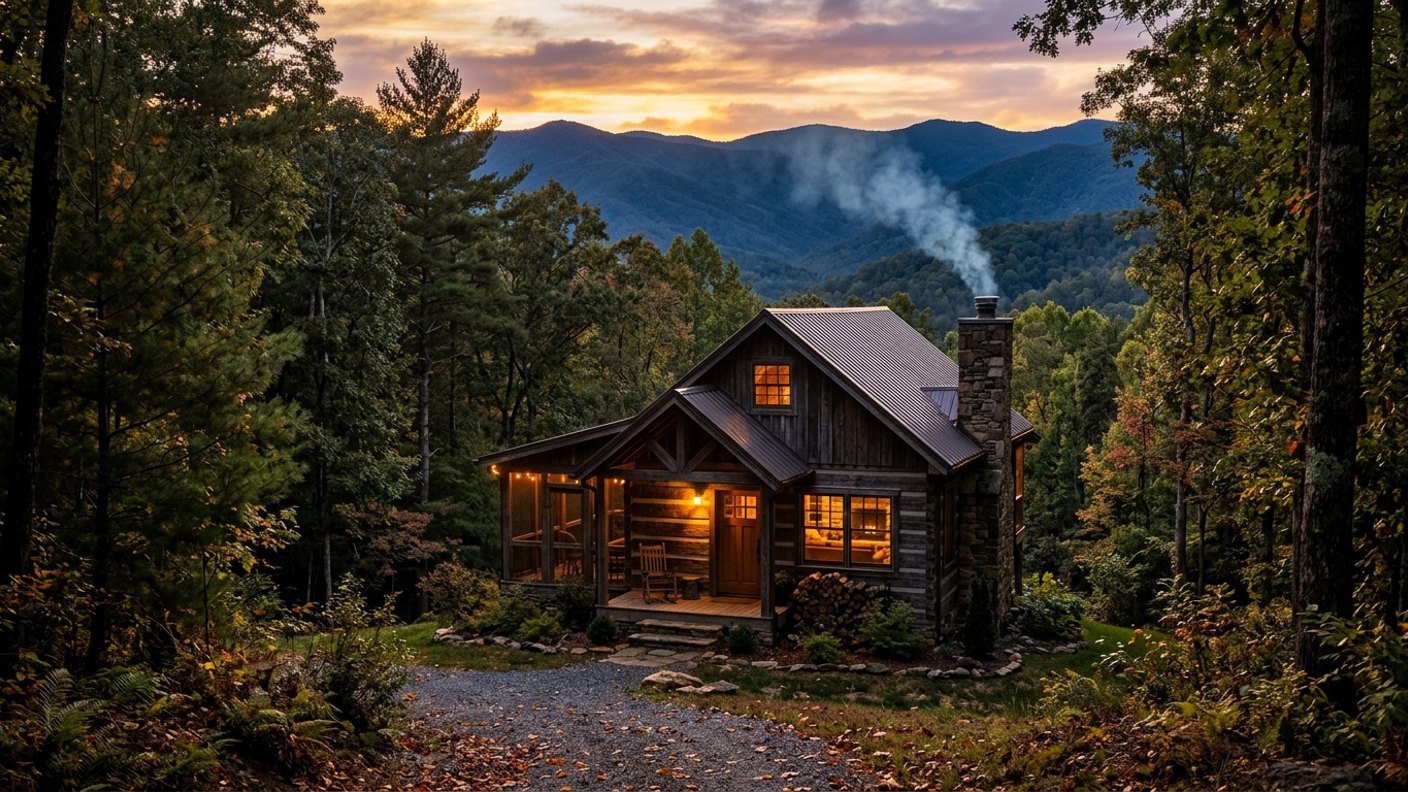
So I did something that made no sense on paper. I bought a falling-down 1970s A-frame in the Blue Ridge for almost nothing, a place everyone sensible would have walked away from. I couldn't tell you exactly why, except that fixing something broken felt like the only thing I could face. I moved in with a sleeping bag and a circular saw and started, with no real idea what I was doing.
Learning by Getting It Wrong
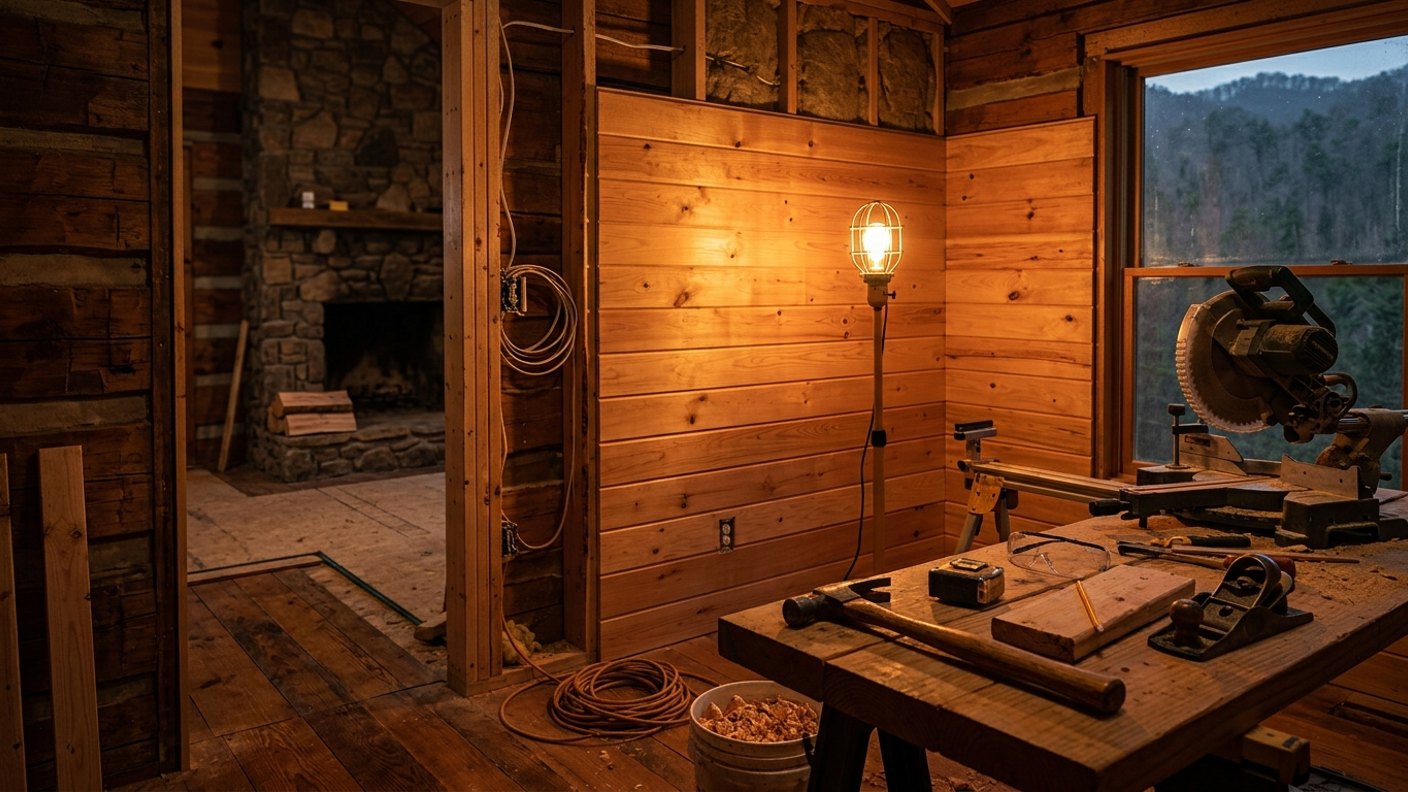
I learned to renovate that cabin by getting nearly everything wrong first and slowly getting it right. I tore out things I shouldn't have, found horrors behind the walls, and made every mistake a person can make on their first cabin. But I also learned, carpentry, systems, how a building goes together, how to fix what I'd broken. The work was hard and absorbing in exactly the way I needed it to be, and it gave the days a shape.
The Lighting Lesson
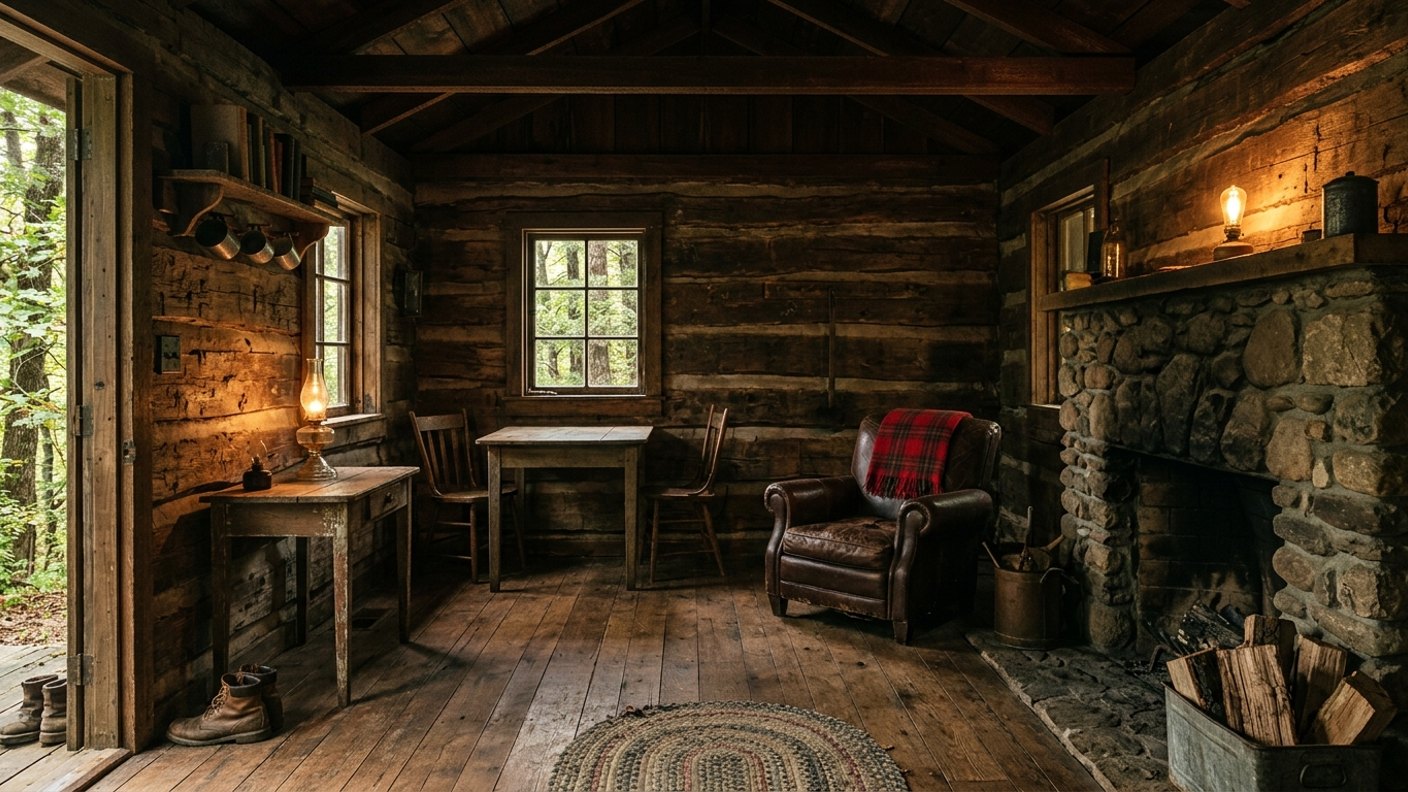
One thing took me embarrassingly long to learn: a cabin lives or dies on its lighting. For months that first A-frame felt grim no matter what I did, until I finally swapped the cold overheads for warm pendants, lamps, and plug-in sconces at human height. The day it went warm, the whole place. And honestly my whole mood in it, changed. I've never under-lit a cabin since, and it's the first thing I tell anyone now.
One Became Another
When the A-frame was done, it was warm, solid, and worth multiples of what I'd paid. And I realized I didn't want to stop. So I found another tired cabin, then another. What started as a way to survive a bad year turned into a way to make a living: buying cabins nobody wanted, bringing them back, renting some, selling some, living in one. The accident became the job.
What the Work Gave Back
The thing I didn't expect is how much the cabins rebuilt me while I rebuilt them. Hard, useful, tangible work, taking something broken and making it warm and whole again, turned out to be exactly the medicine I needed. I'd set out to fix buildings and ended up fixing a fair amount of myself in the process. The two jobs ran in parallel, and I'm not sure I could have done one without the other.
The Life Now
Now I live in the mountains, work with my hands, and answer to the weather and the work instead of a calendar full of meetings I didn't care about. It's not easy money and it's not passive. It's physical, uneven, and entirely hands-on. But it's mine, and it means something. Seven cabins in, I have a life I'd never have designed on purpose and wouldn't trade for the one I lost.
If You're Thinking About It
People email me from the middle of their own bad year, wondering if they could do this. The honest answer: maybe, if you genuinely love the work more than the idea of it. Start with one cabin, learn by doing, hire out what's dangerous, and don't expect it to be easy or quick. But if you need to put your hands on something real and rebuild, a building, or yourself. There are worse places to start than a cabin nobody else wanted.
Gear & lighting in this post: a wood pendant and plug-in wall sconces