Lighting gets genuinely interesting when there's barely any power to wire to. In a normal house you don't think about it. You flip a switch and the grid handles the rest. In an off-grid or barely-wired cabin, every light is a decision about your precious power. And that constraint, annoyingly, pushes you toward exactly the warm, layered lighting a cabin wants in the first place. Here's how I light a cabin with little or no grid behind it.
The Constraint Is a Gift
Going off-grid forces you to actually think about light, which most people never do. You can't just blanket the ceiling in cans and forget it, because every watt comes out of a battery you paid for. So you get deliberate, warm, layered, low-draw, controllable, which happens to be how a cabin should be lit anyway. The power limit turns out to be a design teacher in disguise.
Slash the Demand First
Before adding a single fixture, I cut demand. Warm LED bulbs everywhere sip a fraction of what old bulbs pulled. And a handful of low-wattage layered fixtures beat a couple of bright ones for both mood and power. Add dimmers so you almost never run anything at full. Cutting lighting demand is one of the cheapest ways to shrink the whole solar-and-battery system you have to buy and babysit.
Light That Ignores the Wiring
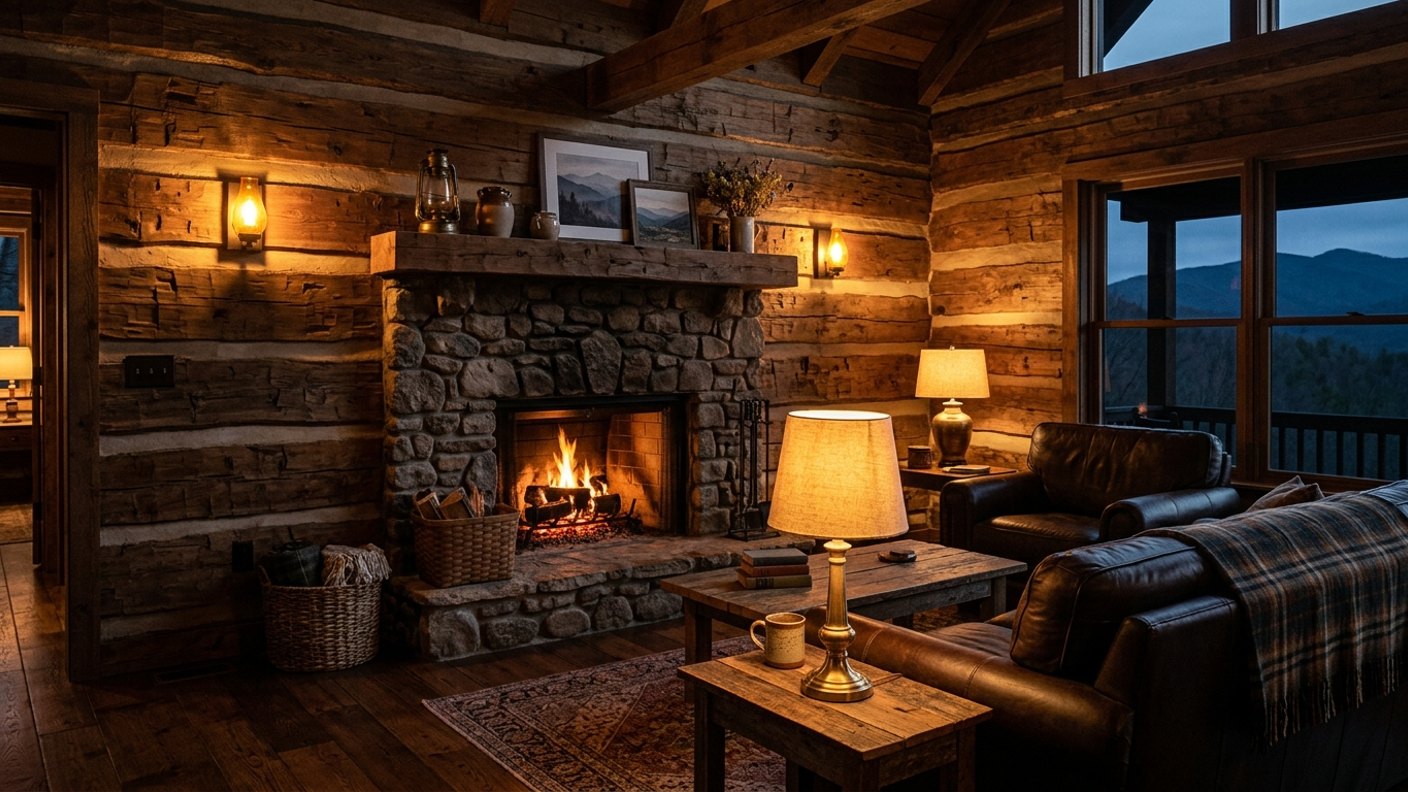
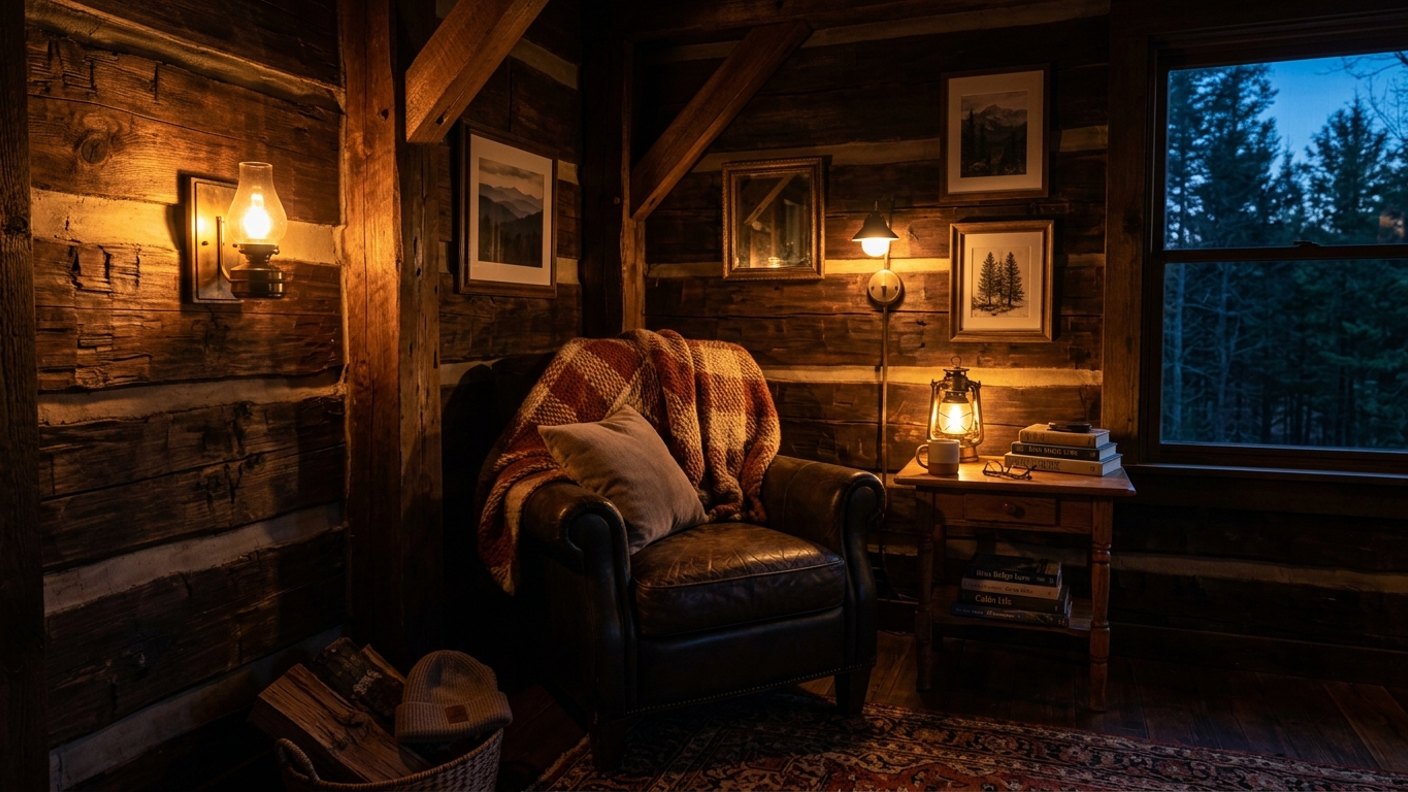
The real key for an off-grid cabin is lighting that doesn't touch the electrical system at all. Rechargeable and battery-operated sconces charge off my system (or in town) and then go anywhere, flanking a bed, beside the wood stove, on a log wall with no circuit behind it. They sip power, need no wiring run through solid logs, and put warm light precisely where I want it. On a barely-wired cabin they're not a fallback, they're the main event.
Why Cordless Suits a Cabin
There's a practical reason cordless lighting and cabins go together: you really don't want to chase wiring through log or timber walls. And old cabins rarely have circuits where you'd want a light. A rechargeable sconce solves both problems at once, no destructive wiring, total freedom of placement. I can light the exact dark corner that's bothered me for months without opening a single wall.
Hardwire Only Where It Earns It
I do hardwire some low-voltage LED lighting off the battery bank, over the kitchen counter, the main living fixture, where a permanent, switched light genuinely earns the wiring and the draw. The rule is that a hardwired off-grid light has to justify both the install and the power it'll pull for years. Most lights don't clear that bar, which is why cordless does so much of the work.
Warm, Always
Whatever the power source, every bulb is warm 2700K. Wood interiors look grim and clinical under cool light and come alive under warm, and in a cabin at night warmth is most of the point. I keep every bulb in a room the same warm tone so the glow reads as one cohesive light, not a clash. Cool or 'daylight' bulbs are the single most common way people accidentally make a cabin feel cold.
Layer It Low
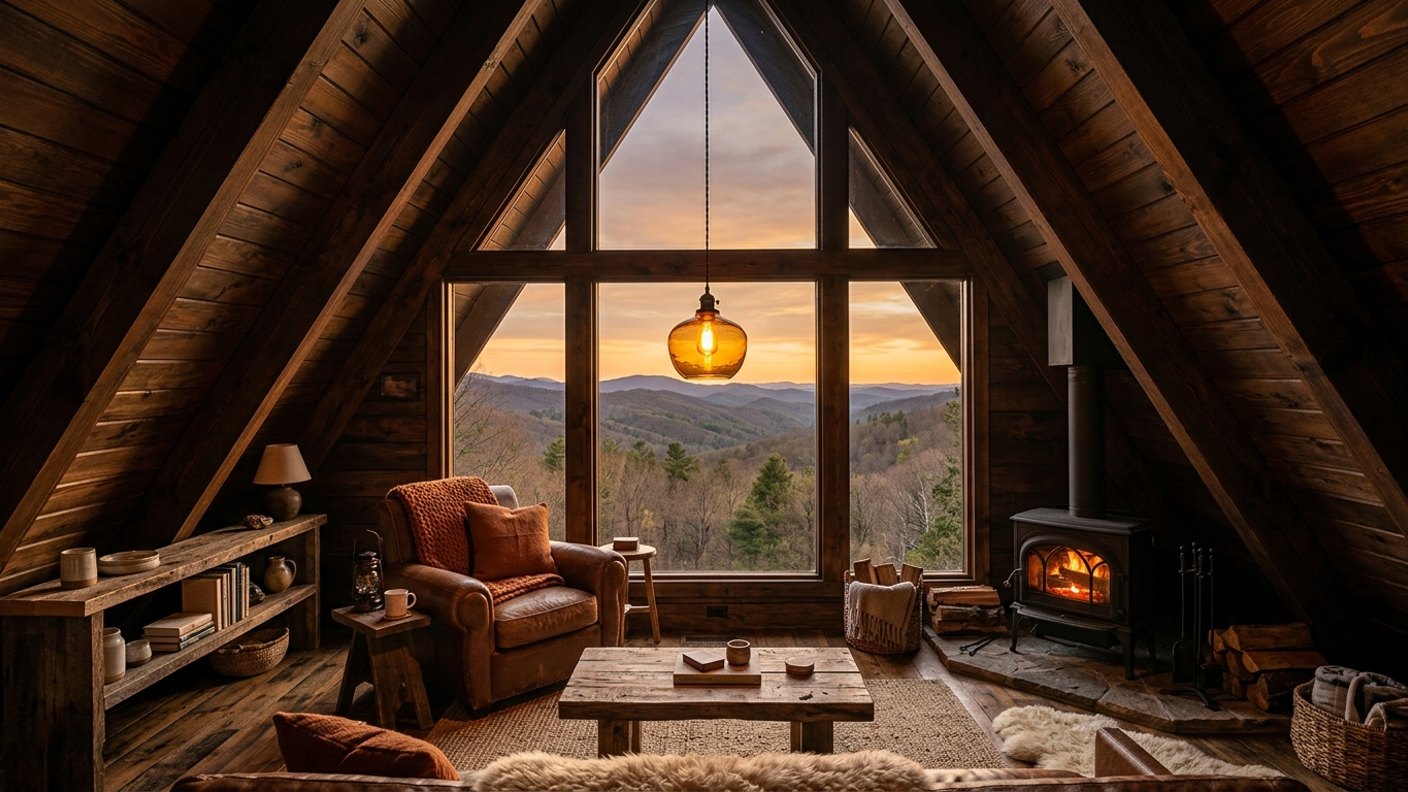
I light an off-grid cabin in warm layers at human height, sconces, lamps, a low pendant, rather than blasting it from the ceiling. Several small warm sources sip less power than one big one and make the cabin feel cozy instead of institutional. Low, layered, warm light is both the efficient choice and the beautiful one, which is the whole happy accident of lighting off-grid.
The Result
Done this way, an off-grid cabin ends up better lit than most wired houses, warm, layered, dimmable. And entirely under your control, with a good chunk of it running on fixtures that touch no wiring at all. The lack of a grid forces the discipline, and the discipline produces exactly the cozy, considered light a cabin deserves. Constraint, it turns out, is the best lighting designer I've ever worked with.
Gear & lighting in this post: rechargeable wall sconces and battery-operated wall sconces