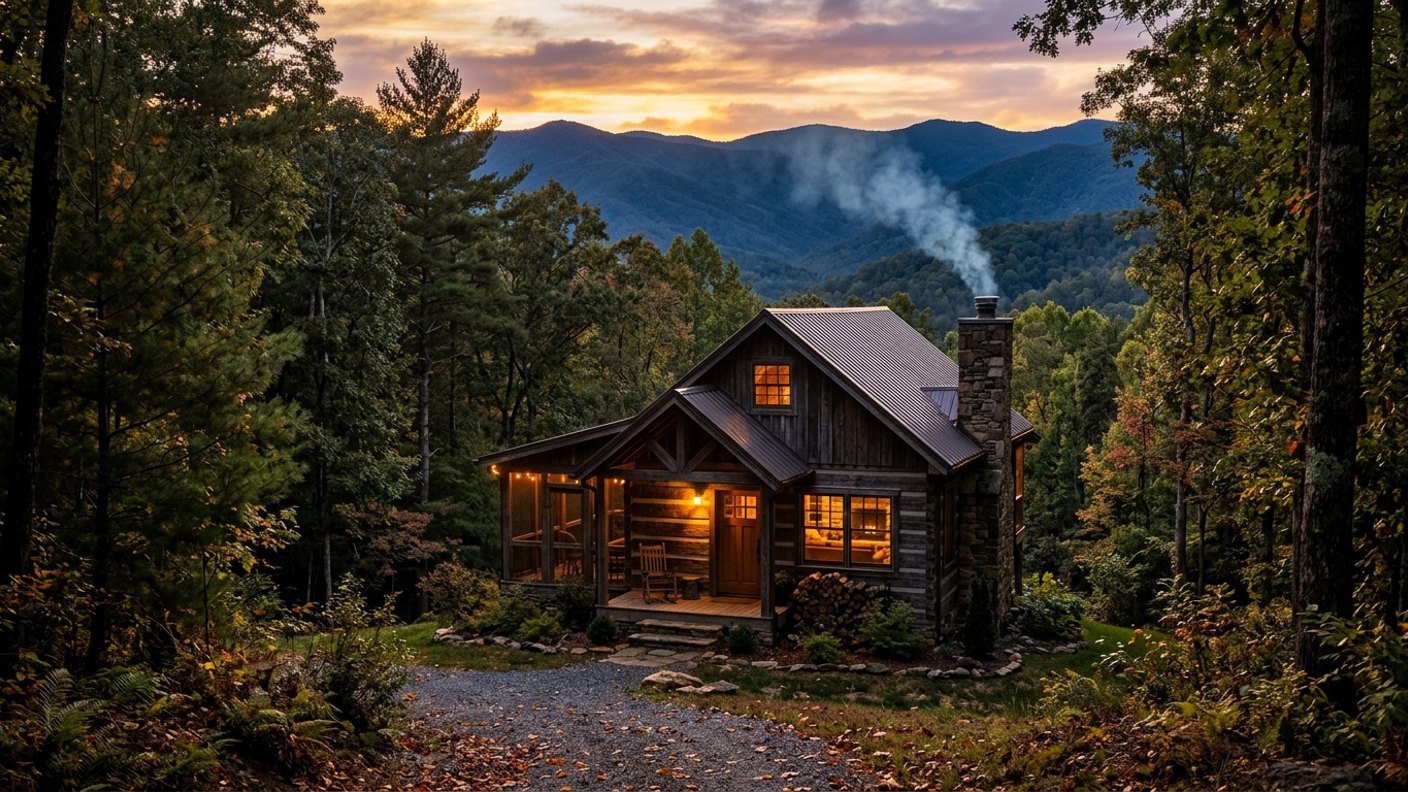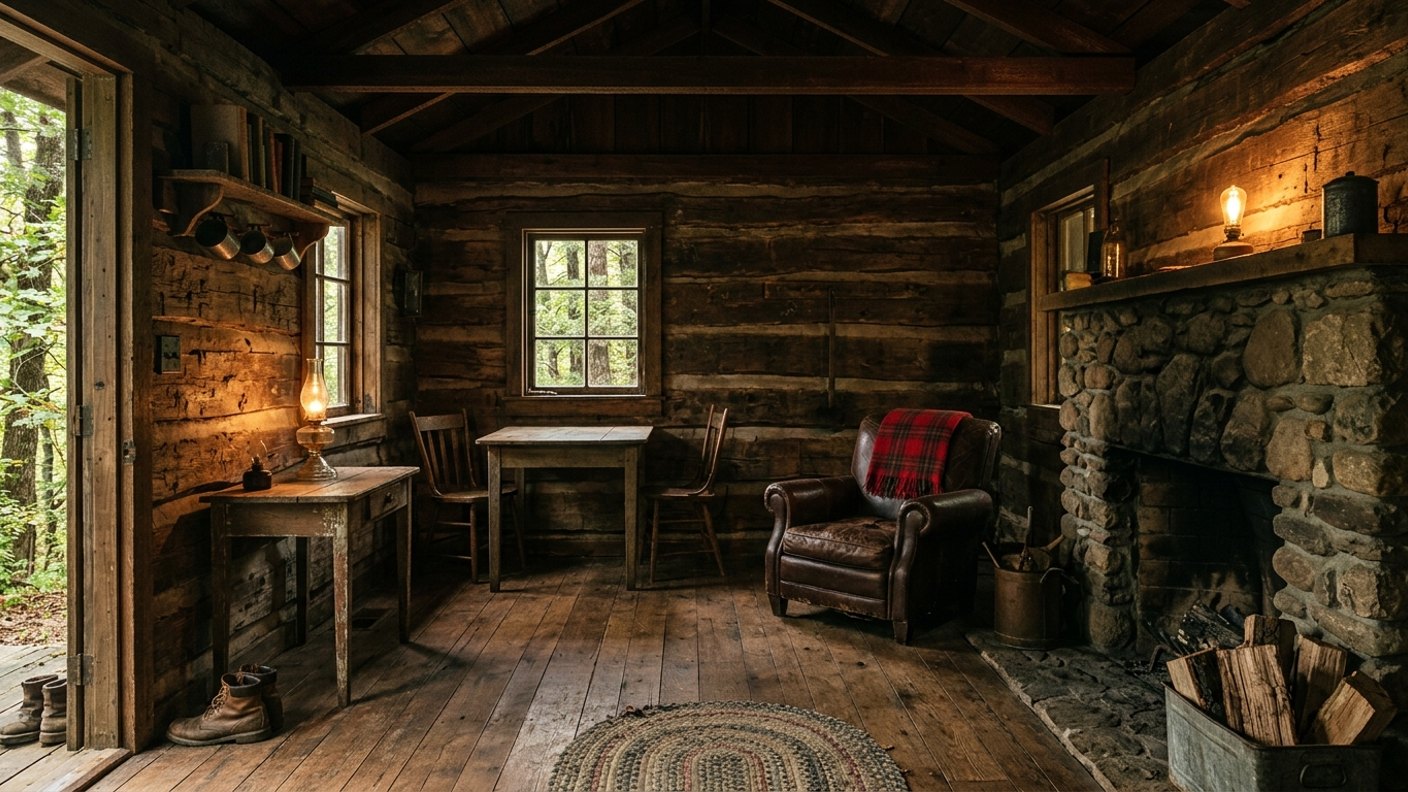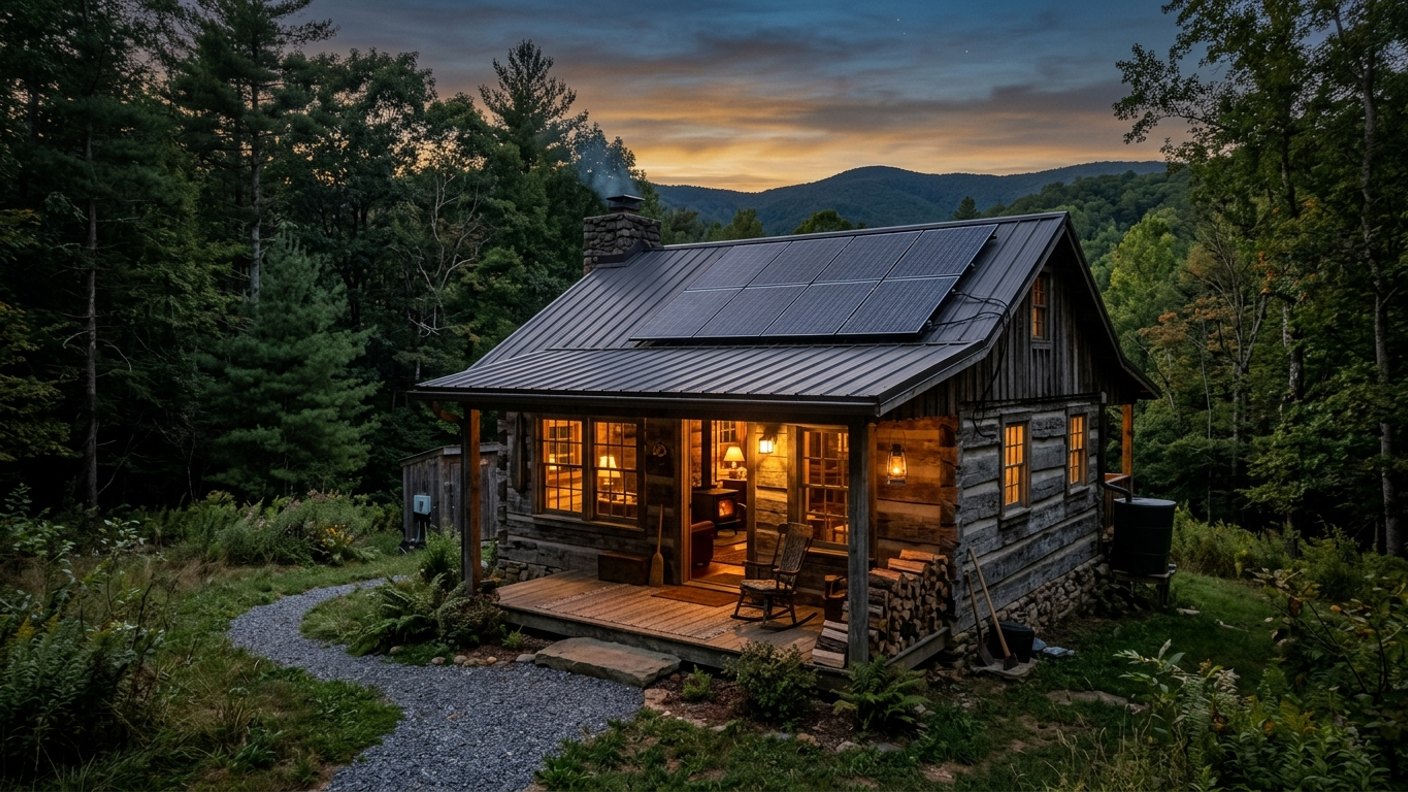
Nobody photographs the battery bank, the well pump, or the septic field. They're also where the money goes: a solar-and-battery setup starts around $5,000, a drilled well runs $5,000 to $15,000, and a septic system $5,000 to $20,000. The off-grid systems that actually make a cabin livable are invisible, unglamorous, and absolutely essential. And they're where the romance of cabin life meets the reality. I've learned more about power, water, and heat than I ever wanted to, the hard way. Here's the unglamorous truth about the systems that turn an off-grid cabin into a home.
Four Systems, No Shortcuts
Off-grid, you're responsible for four things the grid normally handles: power, water, heat, and waste. Until all four are reliable, an off-grid cabin isn't a home, it's camping with a roof. So these get done right and made dependable before anything cosmetic happens. They're not glamorous and they don't earn compliments, but they're the foundation everything else sits on. Skip or skimp on any one and the whole cabin fails to function.
Power: Solar and Batteries
Power usually means solar panels charging a battery bank, with an inverter supplying the cabin and a generator backing it up for long grey stretches. The system gets sized to what the cabin actually uses. And the smartest move is to use less, because lower demand means a smaller, cheaper, more reliable system. Efficient appliances and low-draw LED lighting do more for off-grid power than extra panels. Cutting the load is half the design.
Lighting That Spares the System
This is where off-grid living and good lighting agree: a lot of my cabin light doesn't touch the power system at all. Rechargeable and battery-operated sconces charge off the system or in town, then run for weeks drawing nothing, putting warm light anywhere I want with no wiring. On an off-grid cabin they spare the battery bank and dodge the wiring headaches at once. Cordless warm lighting is one of the easiest off-grid wins there is.
Water: The Hard System
Water is the one people most underestimate and the one most likely to humble you. A well, spring, or rain catchment, all with proper filtration and treatment to be safe, plus pumps and storage. And all of it has to work in February. A reliable year-round source is essential and often the most expensive, fiddliest system to get right. I spend more attention and money on water than anything else, and I've never regretted a dollar of it.
Heat: The Easy Win
After power and water, heat feels like a gift. A good wood stove handles warmth and a fair bit of cooking, propane fills the gaps, and suddenly the cabin is genuinely livable through winter. Heat is the most reliable and satisfying of the off-grid systems, a stove just works, fire after fire. Get the stove and the building envelope right and staying warm off-grid is the least of your worries, which is a relief after the water saga.
Waste: Handle It Once
Nobody wants to discuss it, but waste, a septic system or a quality composting toilet, has to be sorted properly before the cabin's truly livable. And it's no place for shortcuts. I get it designed and installed right one time, then stop thinking about it. It's the least glamorous line item in off-grid life and one of the most important to do correctly, because the consequences of getting it wrong are exactly as bad as you'd imagine.
Keep It Simple and Tough
The golden rule across all four systems: keep them as simple and tough as they can be, because you are the entire maintenance department, often in bad weather. The most reliable off-grid cabins aren't the most elaborate. They're the ones whose owner fully understands and can fix every system on them. I size everything with margin for the worst conditions and resist complexity, because complexity is what fails at the worst possible moment.
Worth the Trouble
Off-grid systems are more work than flipping a switch and paying a utility bill. There's no pretending otherwise. But once they're well-designed, simple, and reliable, they mostly run quietly in the background. And there's a real satisfaction in a cabin that makes its own power, draws its own water, and heats itself with wood you split. The unglamorous stuff is the price of the freedom, and for the right person, it's a price well worth paying.
Gear & lighting in this post: rechargeable wall sconces and battery-operated sconces