The cheapest way to make a small cabin meaningfully bigger isn't an addition (screening in a porch you already have runs about $2,000 to $5,000, versus $15,000 to $40,000 to build one new). It's a screened porch. Conditioned square footage is expensive; a screened porch is a fraction of the cost and, for three seasons of the year, becomes a whole second living room. On more than one cabin it's been the most-used and most-loved space of all. Here's how I build and light one to actually double the cabin.
The Best Value Square Footage There Is
A screened porch is the rare addition that costs little and gives a lot. You're not building insulated, heated, code-heavy conditioned space. You're building a roofed, screened room. So the cost per square foot is a fraction of an enclosed addition. Yet you gain a genuine living and dining area for much of the year. In cabin country, it's one of the highest-return things you can add, full stop.
Treat It Like a Real Room
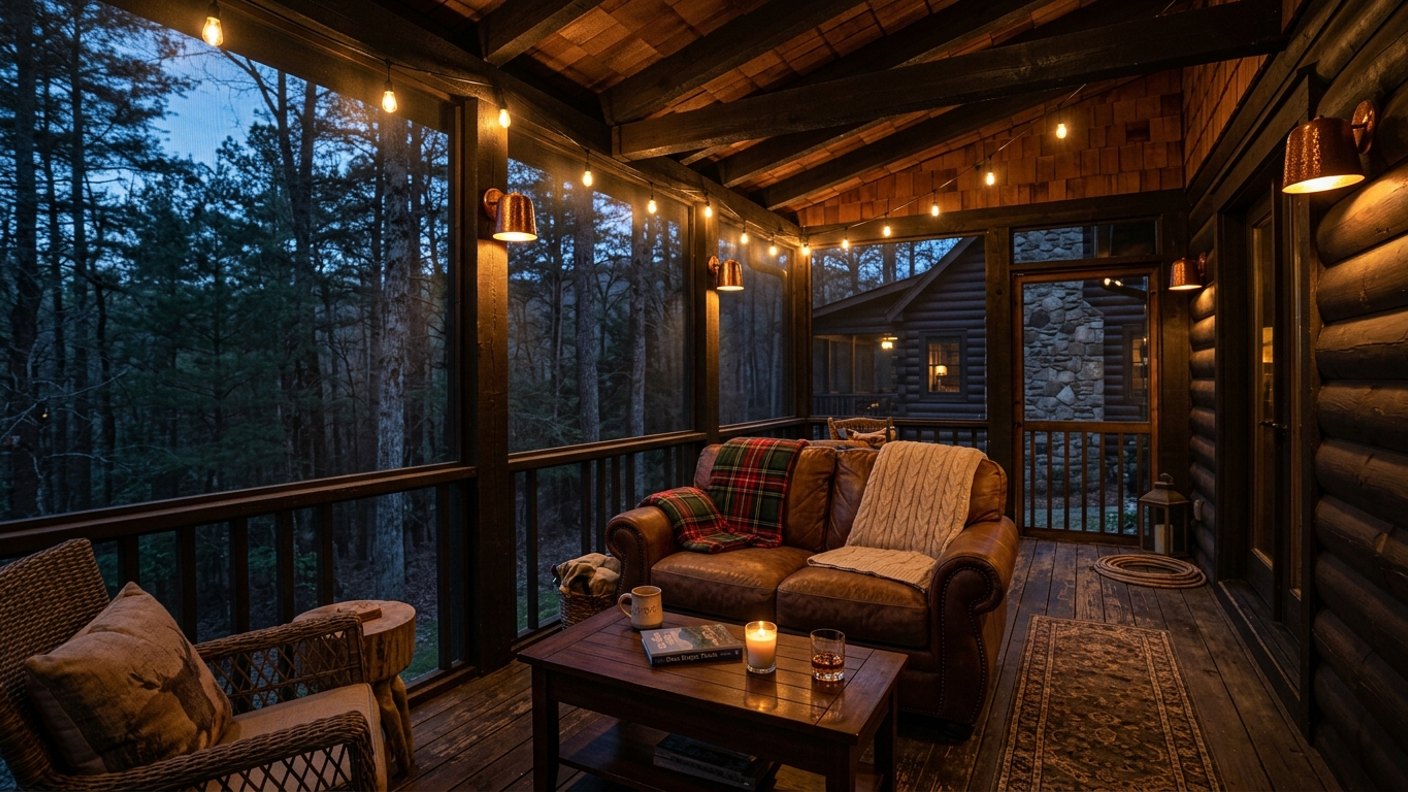
The mistake people make is treating a porch as an afterthought with two plastic chairs. I furnish it like a real room, comfortable seating you'd actually relax in, a dining table, side tables, an outdoor rug, warm lighting. Set up as a proper second living and dining room, a screened porch earns daily use; set up as a leftover, it sits empty. The intent you bring to it decides what you get back.
Light It So It Works After Dark
A porch that goes black at sunset gives you half the hours it could. So I light it warmly and in layers, damp-rated overhead fixtures, plus plug-in sconces and lamps suited to a covered porch for that lived-in glow, and a warm fixture by the door. Warm lighting roughly doubles the usable hours of a porch, turning it from a daytime spot into the best seat in the cabin on a summer evening.
Stretch the Seasons
A few moves extend a screened porch well into spring and fall, siting it off the wood-stove wall so it borrows some warmth, an outdoor-rated heater for chilly evenings. And roll-down shades or panels to break wind and rain. With those, a porch that would be a two-month space becomes a comfortable three-season room. Stretching the season is what turns a nice extra into a space you genuinely live in.
Screen It Properly
The whole point is bugs out, breeze in, so the screening has to be done right, tight, durable, with a good door that actually seals. Mountain evenings bring mosquitoes and worse, and a porch with gappy screens is a porch nobody uses at dusk, which is exactly when you want it. Quality screening and a self-closing door are what make the porch deliver on its one core promise.
Indoor-Outdoor Connection
I site and open the porch so it connects naturally to the cabin's main living space, a wide door or doors, a logical flow from inside to out. When the porch reads as an extension of the living room rather than a bolt-on, the whole cabin feels bigger and the indoor-outdoor living that people come to cabins for actually happens. The connection is half of why a porch works.
Why Renters Love It
On the cabins I rent out, the screened porch is invariably the most photographed and most praised feature. Guests pay for indoor-outdoor space and the feeling of being in the woods without the bugs. And a warmly lit porch at dusk sells a cabin in a single photo. If you're renting a cabin, the porch isn't an extra. It's one of the main events. Build it like you mean it.
Gear & lighting in this post: plug-in wall sconces and entryway light fixtures
My friend Mara at Hearth & Host always says guests pay extra for indoor-outdoor space, and she's right, a good screened porch is the most-photographed, most-loved part of every cabin I've rented out.