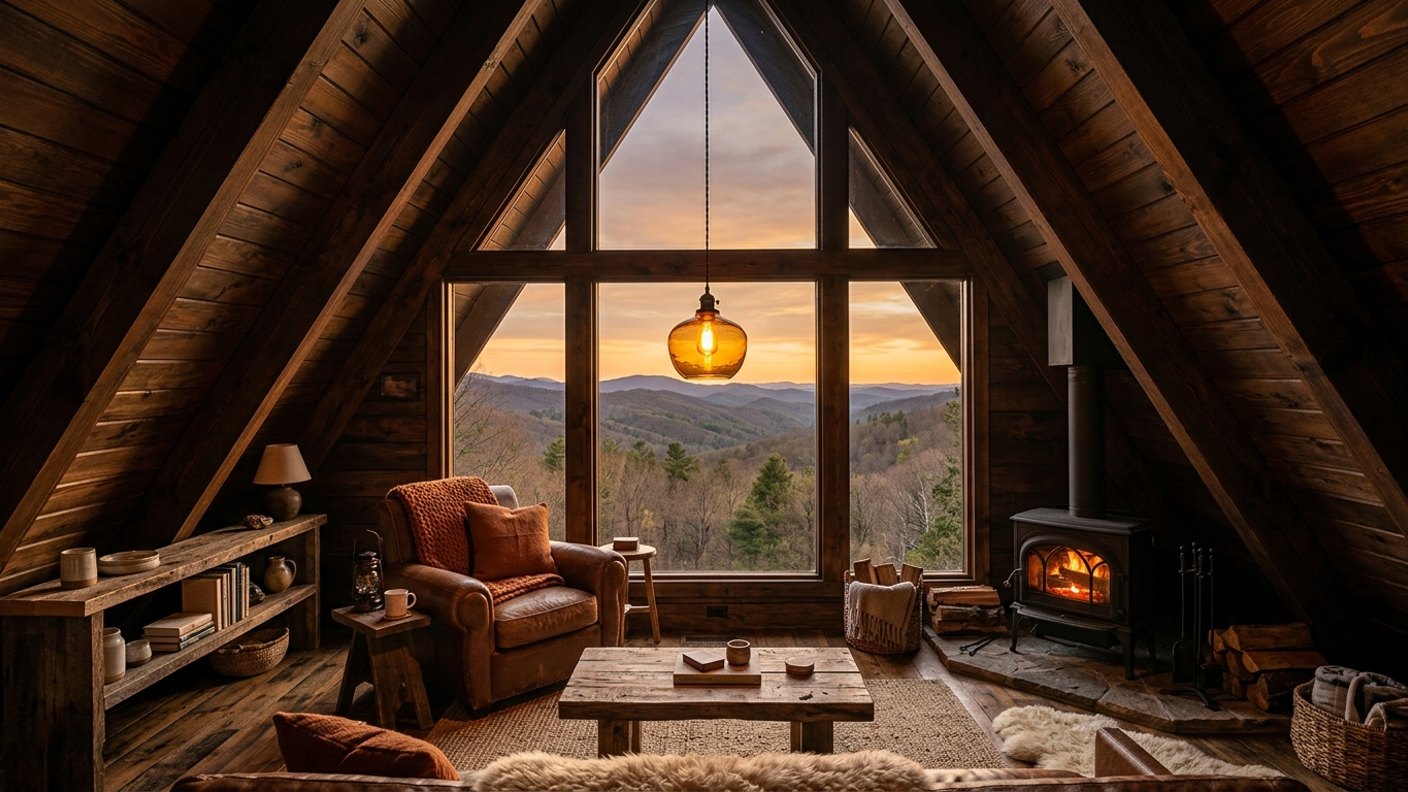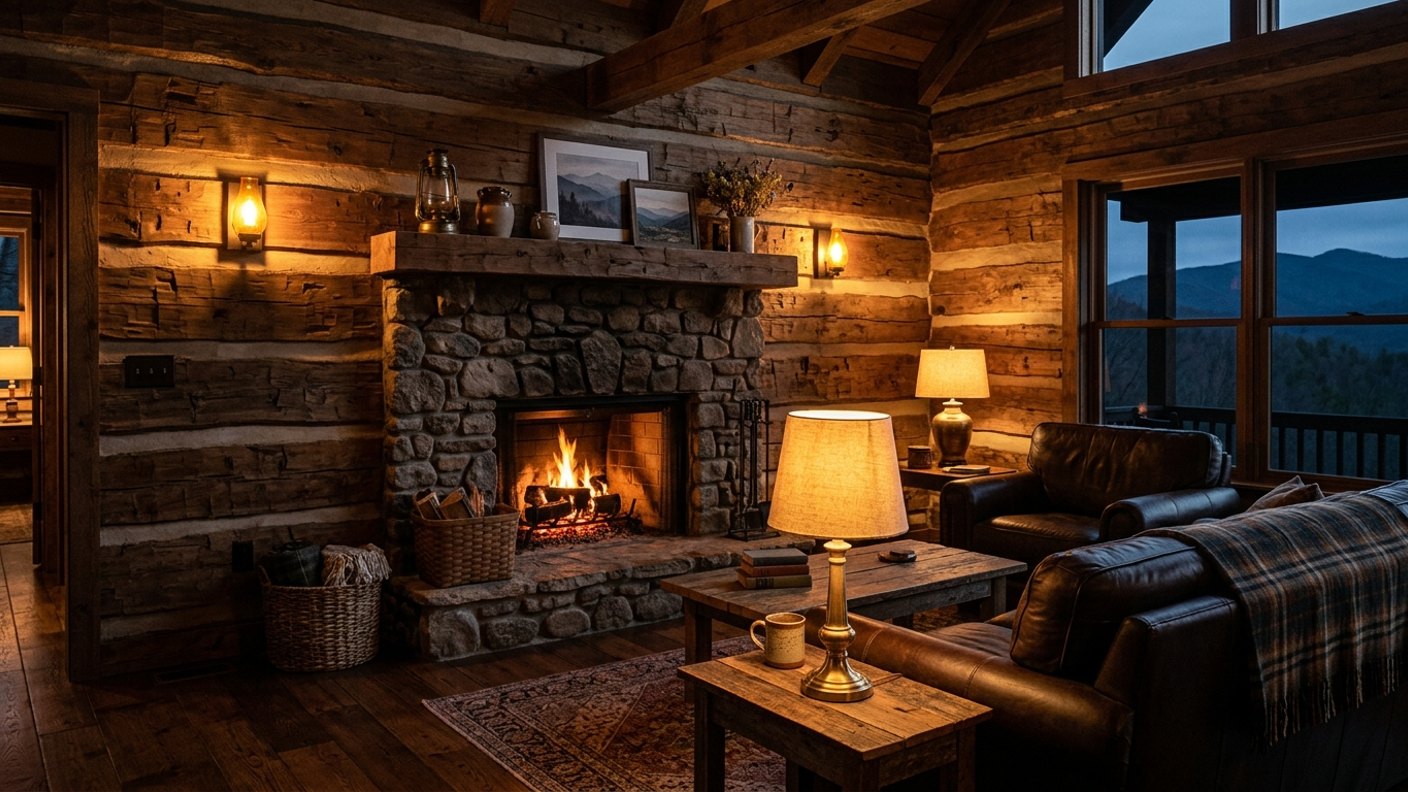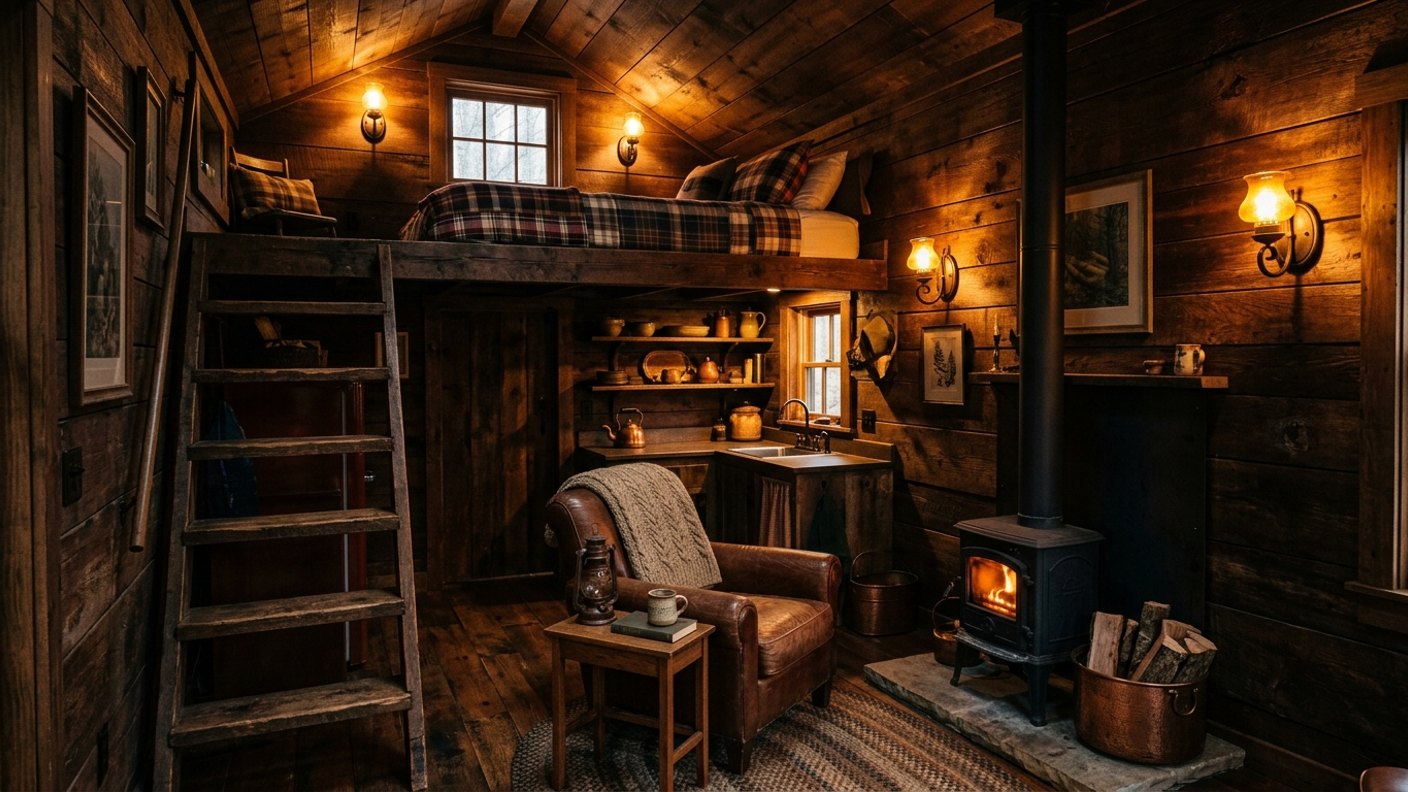
People assume a small cabin has to feel cramped, and they're wrong. At 600 to 800 square feet it just has to be designed, which is a different thing. It has to be designed, which is different. I've reworked tiny cabins that lived bigger and better than houses three times the size, and rough ones that felt like a closet you couldn't leave. The square footage isn't the problem; the thinking is. Here's how I rework a small cabin interior so it actually lives for real, full-time life.
Design It, Don't Just Furnish It
The difference between a small cabin that feels generous and one that feels like a trap is design, not size. A small space punishes every lazy decision, a too-big sofa, a dead corner, clutter on the one available surface. So I plan a small cabin carefully, where in a big house I could get away with winging it. Every square foot has to earn its place and ideally do two jobs.
Open the Main Space
Wherever the structure allows, I open the main space so living, cooking, and eating share one bright room, and tuck sleeping into a loft or a compact bedroom. One open, multi-function room lives far bigger than the same area chopped into three cramped ones. Clear sightlines and defined zones, a rug here, a counter there, let a single small space feel like a whole little home.
Furniture That Pulls Double Duty
Every piece in a small cabin should earn its keep, ideally doing two things, a bench that stores firewood, a table that folds, a bed with drawers under it, a sofa that sleeps a guest. And scale matters more than anything: one oversized piece can wreck a small cabin, while a few right-sized, dual-purpose pieces keep it open and functional. I'd rather have less furniture that works harder.
Build Storage Upward
Floor space is the scarcest thing in a small cabin, so I move storage onto the walls and into dead space, shelves climbing the walls, drawers under the stairs and benches, hooks and rails, a loft for what you rarely reach for. Built-in, vertical storage scaled to the cabin keeps the living area clear, and a clear floor is most of what makes a small space feel big.
Lighting That Frees the Surfaces
In a small cabin you can't afford to lose your one tabletop to a lamp, so I lean hard on wall-mounted light. Wall-mounted reading lamps by the bed and the chair, small wall lamps in the corners, and one warm pendant, all of it off the precious surfaces. Warm, layered, surface-free lighting keeps a tiny cabin both bright and uncluttered, which is exactly the combination a small space needs.
Lighten Around the Wood
A small all-wood interior can close in on you, so I keep the logs or beams I love but lighten the surfaces around them, ceilings, non-wood walls, floors. So the space breathes. The wood stays the star, but against a brighter backdrop it feels like a feature instead of four walls pressing in. In a small cabin especially, a little visual breathing room goes a long way.
Zone It With Light and Rugs
Because one room is doing several jobs, I define the zones with rugs and pools of warm light, a lamp marking the reading corner, a pendant over the table, a rug under the sitting area. The eye reads distinct areas, and the small cabin feels considered and roomy rather than like a single crowded box. Zoning is how one little room becomes several.
Build for the Whole Day
The real test of a small cabin is whether it works from morning coffee to a winter evening, not just for a photo. So I design for the full day, flexible furniture, real storage, proper heat, good warm light to read by at night. Nailed, a small cabin isn't a compromise; it's a tight, warm, well-run little home that happens to leave you more time and money for the life outside it.
Gear & lighting in this post: wall-mounted reading lamps and small wall lamps