The first question anyone asks is the number: what does it cost to renovate a cabin? The honest answer is the unsatisfying one: it depends. But in my experience a light refresh runs $20,000 to $40,000, while a full gut to the studs lands somewhere between $60,000 and $120,000. It depends, wildly, on condition, size, location, and how much you do yourself. But that's a cop-out without detail, so here's the real breakdown of where the money actually goes when you renovate a cabin, from someone who's written these checks seven times.
Condition Drives the Number
The single biggest factor isn't size, it's condition. A cosmetically dated but structurally sound cabin might need a few thousand dollars of paint, lighting, and refreshing. The same-sized cabin with a failing roof, rot, and dead systems can run into the tens of thousands or far more. So when someone asks the cost, my first question back is always about condition, because that's what really sets the number.
The Big, Invisible Costs
The expensive parts of a cabin renovation are the ones you can't see, structure and envelope (foundation, frame, roof, windows, stopping water) and systems (electrical, plumbing, heat. And off-grid power and water if you're off the grid). These swallow the budget and earn no compliments, which is exactly why people underestimate them. The unglamorous, invisible work is almost always the biggest line item, and it's not optional.
The Surprises Behind the Walls
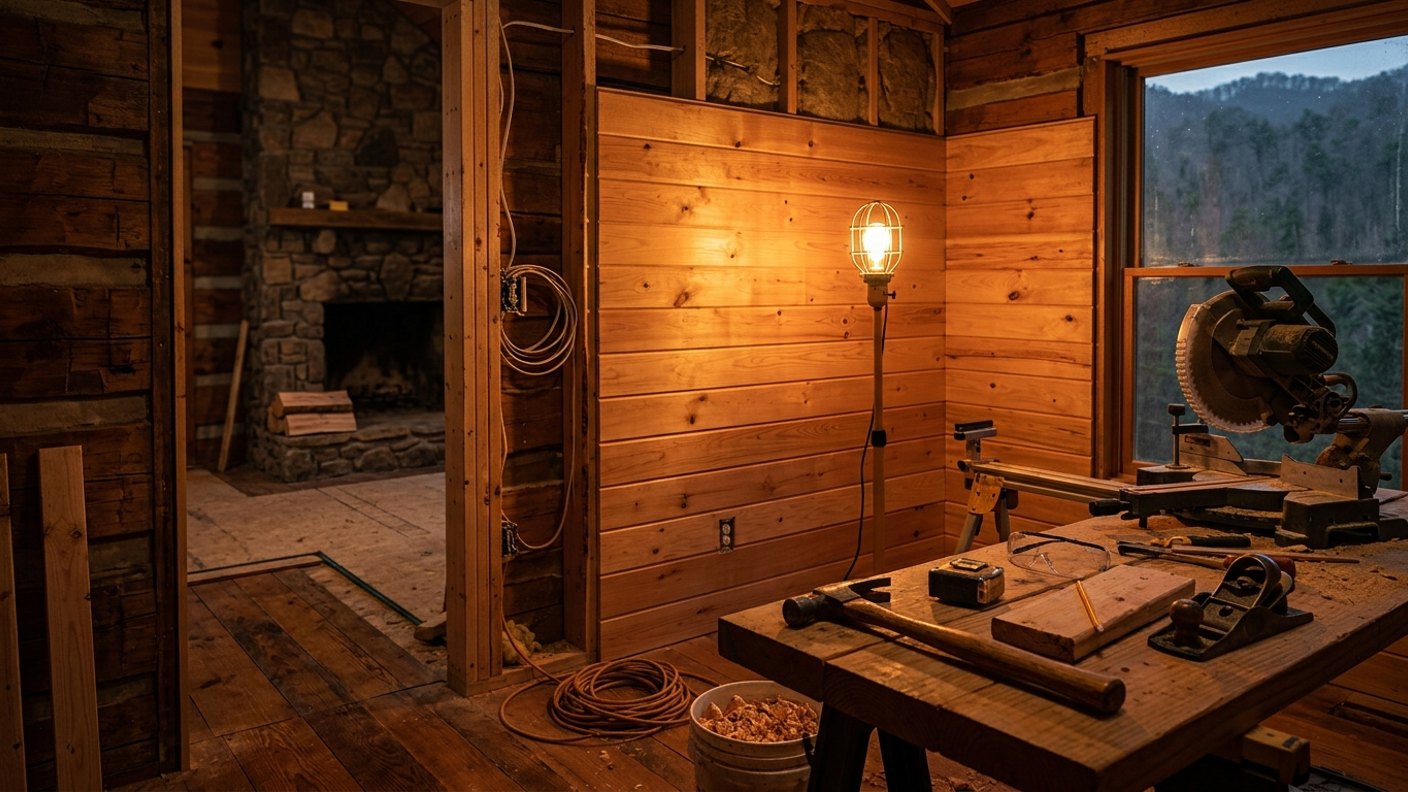
Old cabins hide things, rot, water damage, bad wiring, no insulation, previous owners' creative DIY. And you find them only once you open the walls. These surprises are the number one reason cabin renovations blow their budgets. I now carry a serious contingency, 15 to 20 percent or more, on every cabin, because the surprise isn't a possibility, it's a certainty; I just don't know yet what it'll be.
Where the Cheap Wins Are
Here's the good news that balances the scary costs: the cheapest improvements give the most back. Warm layered lighting, plug-in sconces, lamps, warm bulbs, transforms how a cabin feels for very little, and needs no electrician. Paint is the cheapest transformation there is. Refreshing a kitchen or bath beats replacing it. Dollar for dollar, these visible, felt improvements deliver far more than the expensive invisible work, even though both are needed.
Doing It Yourself Versus Hiring
How much you do yourself swings the cost enormously. The cosmetic work, demo, paint, flooring, trim, plug-in lighting, is mostly patience, and doing it yourself saves real money. But the code-critical and dangerous work, structure, roof, electrical, plumbing, should go to licensed pros, both for safety and because mistakes there cost more than the savings. Knowing which is which, and being honest about your own skills, is part of controlling the budget.
Refresh, Don't Replace
A huge amount of cost savings comes from refreshing rather than replacing. A painted and re-hardwared kitchen instead of a new one, a refreshed bath instead of a gut, cleaned-up logs instead of new surfaces. In a cabin, a little honest wear actually looks right, so refreshing isn't just cheaper, it often looks better than replacing. Choosing to refresh wherever possible is one of the biggest levers on the final number.
Don't Over-Renovate
The most expensive mistake isn't a surprise behind a wall. It's over-renovating, spending big to modernize a cabin in ways that don't add value and strip its character. I've learned to spend on what makes a cabin work and feel like a cabin, and to stop there. Pouring money into making a cabin something it isn't is how budgets balloon for no return. Restraint saves more than any single tactic.
The Honest Bottom Line
So what does it cost? For a sound cabin needing cosmetic work, surprisingly little, a few thousand can transform it, with lighting and paint doing the heavy lifting. For a rough one needing structure and systems, a great deal more, and always more than the first estimate. Budget realistically, carry a real contingency, do the safe work yourself, refresh don't replace, and spend where it shows. Do that, and the number becomes a lot more friendly than the horror stories suggest.
Gear & lighting in this post: plug-in wall sconces and warm table lamps