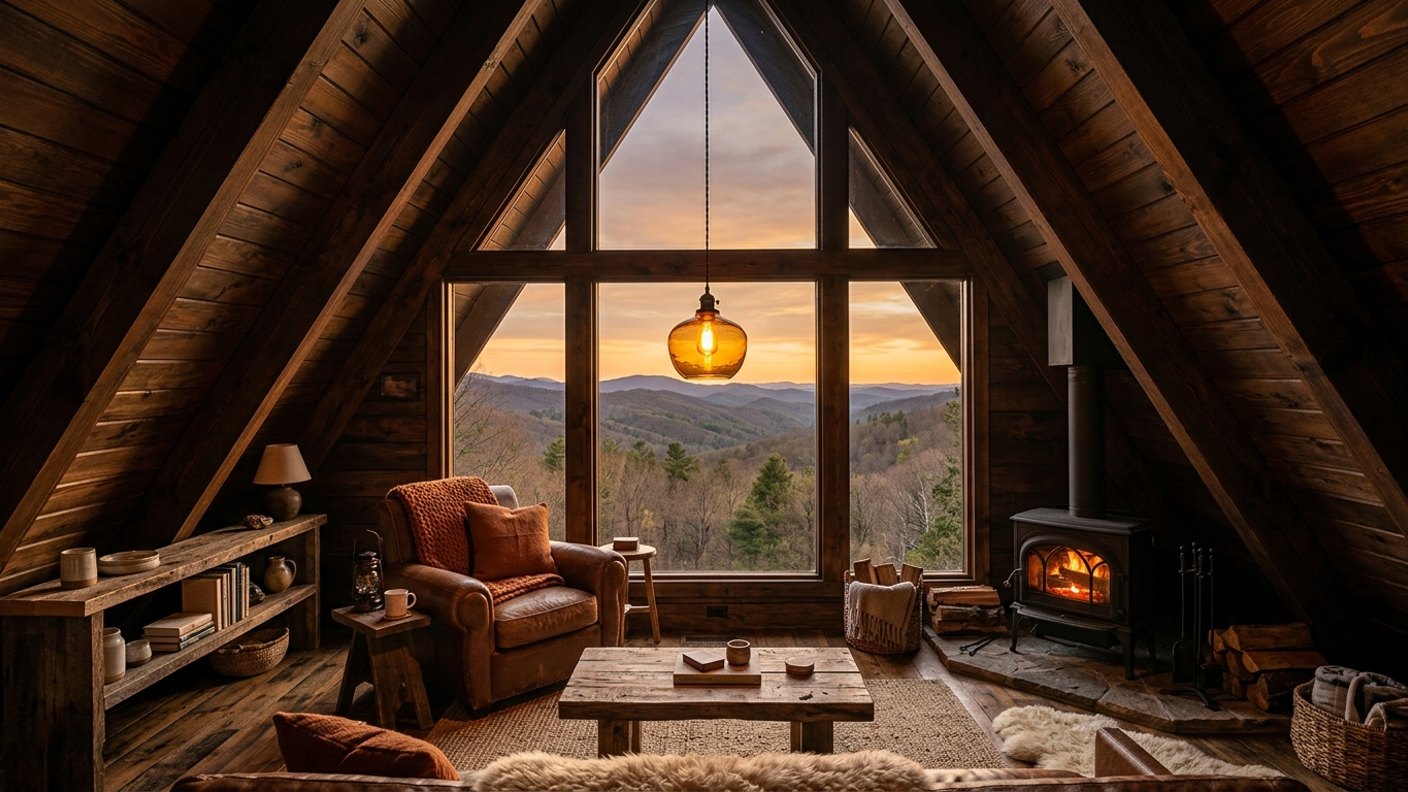
A cabin without a good wood stove is just a cold box with a nice view. The stove is the heart of the place. The thing the whole main room organizes itself around, the reason a winter evening in a cabin beats a winter evening anywhere else. So restoring the stove and building a proper hearth around it is one of my favourite parts of any cabin renovation. Here's how I do it.
Restore Before You Replace
A lot of old cabin stoves are worth saving. A solid cast-iron or steel stove can be cleaned, re-gasketed, repainted with stove paint, and brought back to excellent working order for a fraction of a new one. And plenty of old stoves are built better than today's budget models. I always have an old stove inspected first, because a cracked body or a failed baffle is a dealbreaker. But a sound one, restored, will outlive me.
Safety Is Not Negotiable
This is the one part of a cabin renovation where I improvise nothing. Correct clearances to anything combustible, a hearth pad sized to the manufacturer's spec and code, a properly sized and insulated flue, and a permit and inspection where required. Wood stove safety is the difference between the heart of the cabin and the cause of its destruction. So I do it exactly by the book, every time, no shortcuts.
Build a Generous Hearth
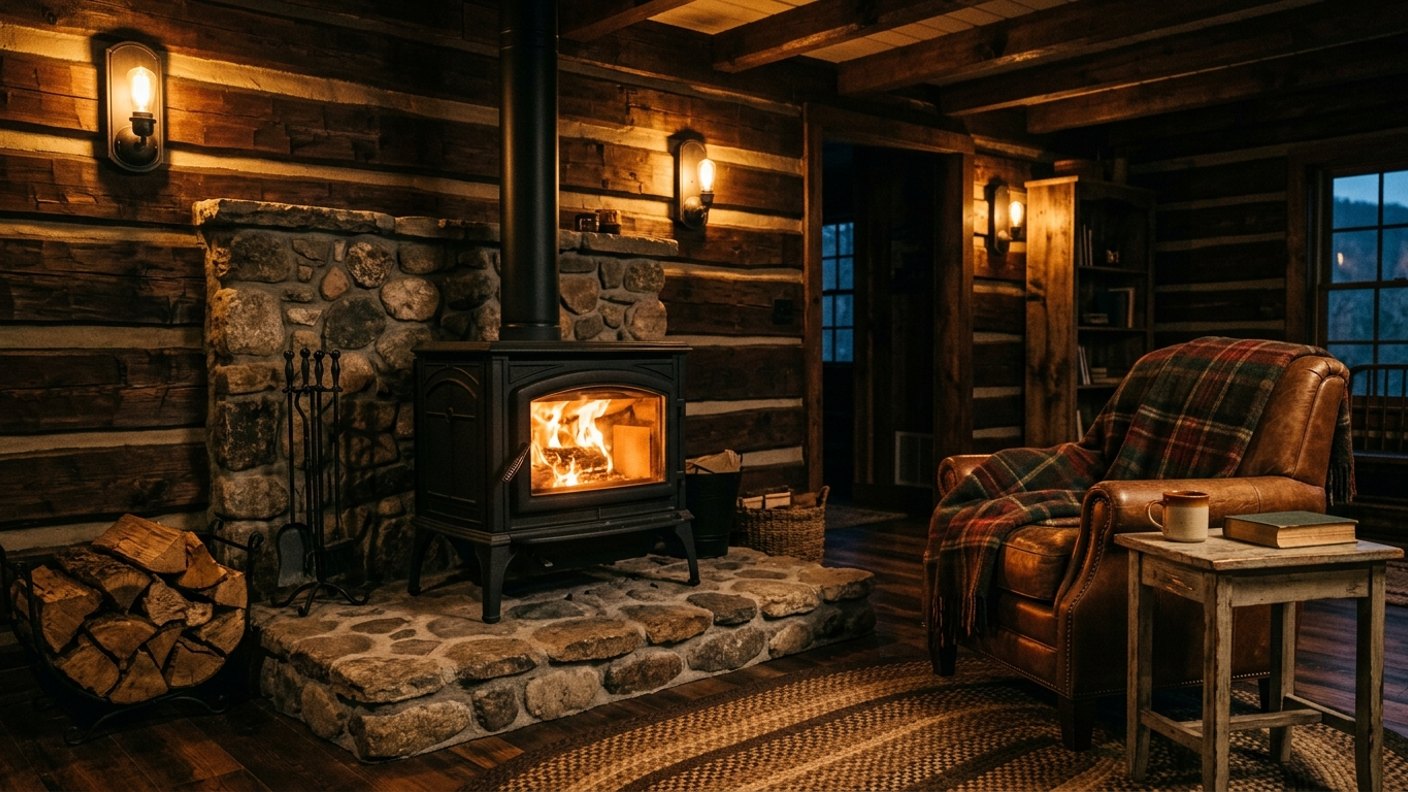
The hearth has to meet the required dimensions for spark and heat protection. But I usually build it a little larger than the minimum. A generous stone or masonry hearth gives a safety margin, takes the abuse of loading wood. And simply looks and works better, anchoring the stove as a real architectural feature. A stingy little pad reads as an afterthought; a proper stone hearth reads as the heart of the room.
Stone That Belongs
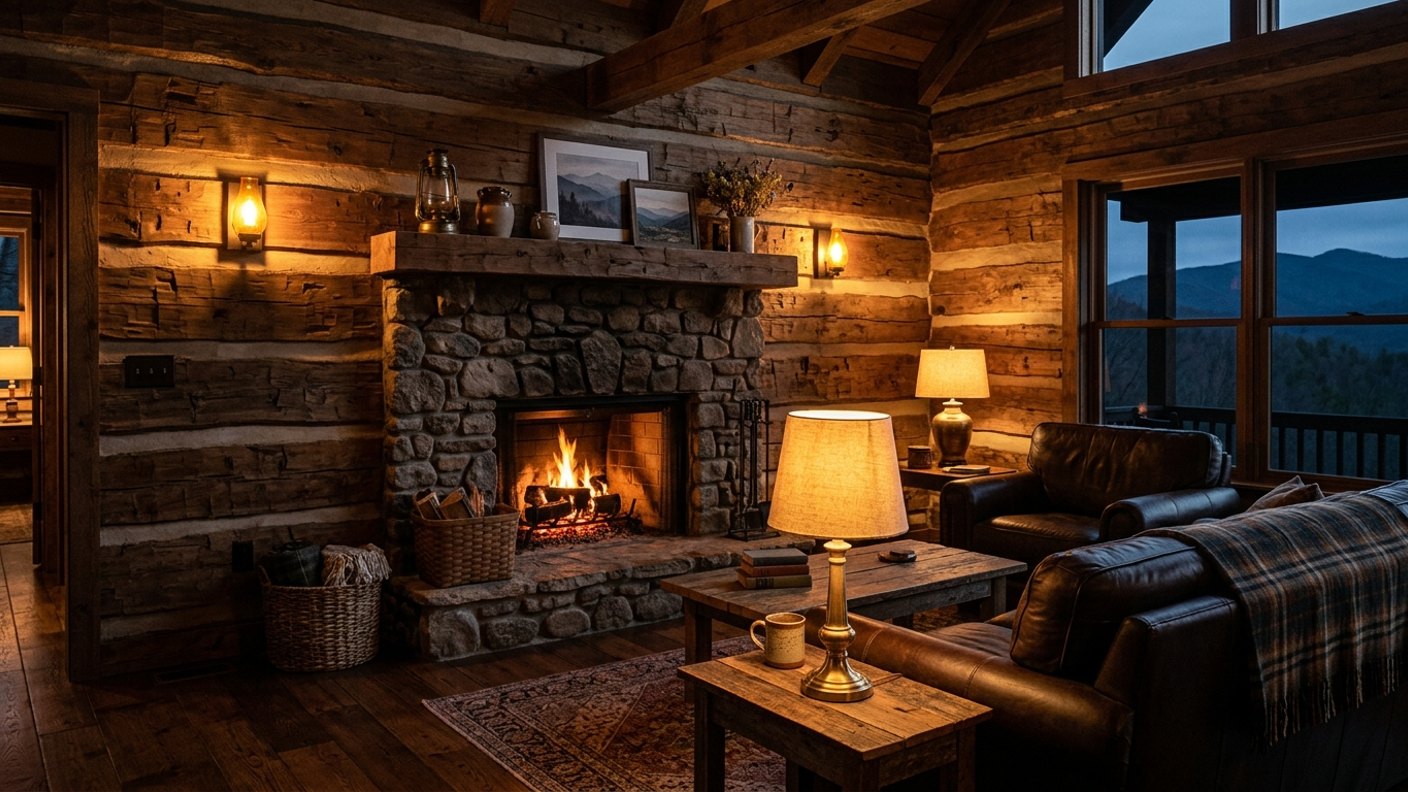
I choose hearth and surround materials that suit the cabin, local stone, honest brick, something with texture and warmth rather than a slick modern tile that fights the building. The hearth should look like it grew out of the cabin, not like it was shipped in from a showroom. In a cabin, natural, slightly imperfect materials always read more right than polished perfection.
Give the Stove Room
A stove crammed into a corner never becomes the heart of anything. I give it breathing room, set it where the seating can gather toward it, and leave space to load wood and tend a fire comfortably. The stove wants to be the centre of gravity of the main room. And that only happens if you let it command the space rather than apologising for it in a tight corner.
Frame It With Light
Here's the part people forget: the fire is wonderful while it's roaring, but the hearth area needs to glow after the flames die down too. So I frame the stove with warm light, sconces on the wall nearby and a table lamp on a side table, all warm 2700K. Warm lighting around the hearth keeps it the heart of the room all evening, not just while the fire's high. The stove and the lamplight work together.
Seating Toward the Fire
Once the stove and hearth are set, I arrange the whole room around them. The best chair angled toward the fire, a spot to put a drink and a book, everything oriented to the warmth. A cabin living room has one job in winter, and it's this. Get the seating pointed at a well-set, warmly lit stove and the room more or less designs itself.
The Heart of the Cabin
By the time a restored stove is sitting on a generous stone hearth, framed in warm light with the seating gathered toward it, the cabin has a heart. Everything else in the renovation supports this one spot. The place you'll actually spend every cold evening. Of all the work a cabin needs, getting the stove and hearth right is the part that most turns a building into a home.
Gear & lighting in this post: warm wall sconces and table lamps for the living room