A cabin bedroom should give you the best sleep you get all year, quiet, dark, cool, wrapped in wood and warmth, miles from anything that beeps. Half the reason people love cabins is how they sleep in them. So I build a cabin bedroom around actual rest, not just how it photographs. Here are the cabin bedroom ideas I use to make one restful.
Build It Around Sleep
Before anything pretty, a cabin bedroom has to deliver sleep, a quality mattress, good bedding, darkness, quiet, the right temperature. These are the things you actually feel at 6am, and they matter more than any styling. I spend on the bed and the light control first, then make it beautiful around them. A lovely cabin bedroom you sleep badly in has failed at its one real job.
Lean Into the Cocoon
A cabin bedroom is one room where small, low, and wood-wrapped is a feature, not a problem. So I lean into the cocoon, let the wood and beams enclose the space, go a little deeper and snugger with the palette than I would in the living areas. And make it feel like a warm den to disappear into. Enveloping warmth is exactly what tells your body it's safe to sleep. Don't fight the snugness; amplify it.
Layer the Bedding
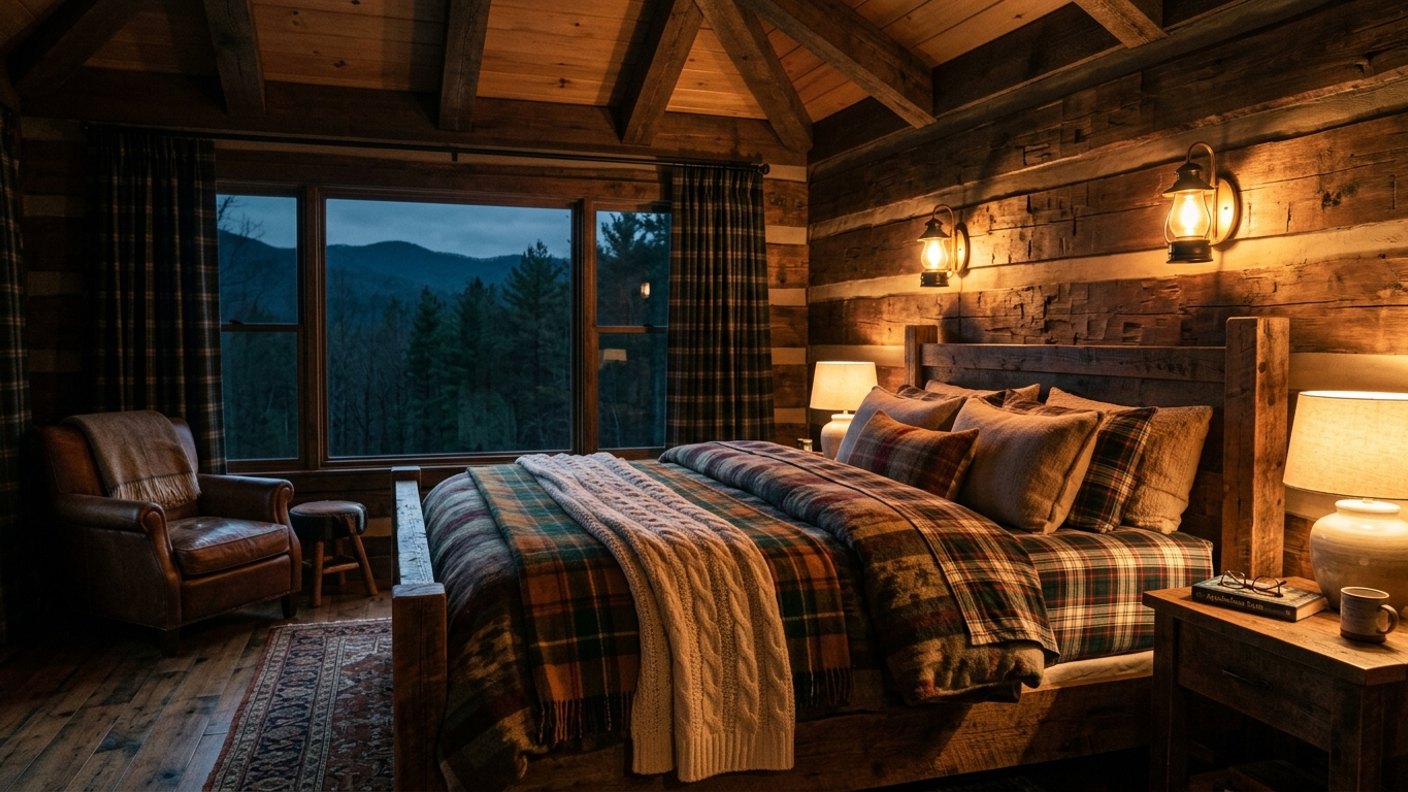
Warmth and rest live in the bedding, so I layer it generously, wool, flannel, linen, a heavy throw, natural materials that feel good and regulate temperature through a cold mountain night. Good, layered, natural bedding is both the comfort and a big part of the look in a cabin bedroom. It's where I happily spend, because it's the thing you're literally wrapped in all night.
Soft Bedside Light
Lighting in a cabin bedroom is warm, low, and on each side of the bed. I use bedside sconces or wall-mounted reading lamps. They free the nightstands, give each person their own light, and look right on a wood wall, all warm 2700K and dimmable. A harsh overhead has no place here. Soft, warm bedside light you can read by and then dim to nothing is what makes the room feel restful and ready for sleep.
Control the Morning Light
Mountain mornings come early and bright, so blackout-capable window coverings are one of the most valuable things in a cabin bedroom. Paired with a cabin's natural quiet and cool, good light control delivers exceptional sleep. The kind people remember a trip for. It's a small, cheap addition that punches far above its cost in actual rest. I never skip it.
A Warm, Deep Palette
The bedroom is where a cabin can go darker and warmer than anywhere else, soft warm neutrals, deep greens, warm charcoals, earthy tones that wrap the room and complement the wood. Where the living areas want lightening, the bedroom wants enveloping. A deep, warm, cocooning palette signals rest and makes the room feel like a refuge, which is precisely what you want to wake up grateful for.
A Rug Underfoot
Cold feet on a cold floor first thing is a small misery a rug fixes for almost nothing. A soft rug beside the bed gives you somewhere warm to land on a winter morning, adds another cozy layer, and softens the room. In a cabin bedroom it's a small comfort that earns its place every single morning. Little warmths like this are what make the difference between a nice room and a beloved one.
Keep It Calm
Finally, I keep the cabin bedroom calm and uncluttered, somewhere to actually switch off. No screens fighting for attention, surfaces kept clear, just warmth, soft light, good bedding, and quiet. A cabin bedroom is a chance to design a room purely for rest, the kind most houses never manage. Keep it calm, warm, and dark, and it'll reward you with the best sleep of your year.
Gear & lighting in this post: bedside wall sconces and wall-mounted reading lamps