If your cabin feels dark and gloomy inside, I can almost guarantee it's the lighting. And almost everyone gets it wrong in exactly the same way. They light a wood cabin like it's a painted house, throw one cool overhead at it, and wonder why it still feels like a cave at night. Lighting a dark cabin properly is the single biggest improvement you can make to how it feels, and it's cheap. Here's how.
Why Wood Cabins Are Dark
The root problem is physics: wood absorbs light, where painted walls bounce it around. A wood-walled, wood-ceilinged cabin can swallow the same fixture that would brightly light a painted room, leaving it dim. Add small cabin windows and an old dark finish on the logs, and you've got a space that drinks every lumen you give it. Understanding that wood needs far more light is the start of fixing it.
The Mistake Everyone Makes
The universal cabin lighting mistake is the single cool overhead. One bright, cool-temperature ceiling fixture does two bad things at once. It flattens the room into a shadowless box, and its cool colour makes the warm wood look grey and grim. People then assume the cabin is just dark and live with it. It isn't dark; it's badly lit. The fixture is the problem, not the cabin.
Layer It at Several Heights
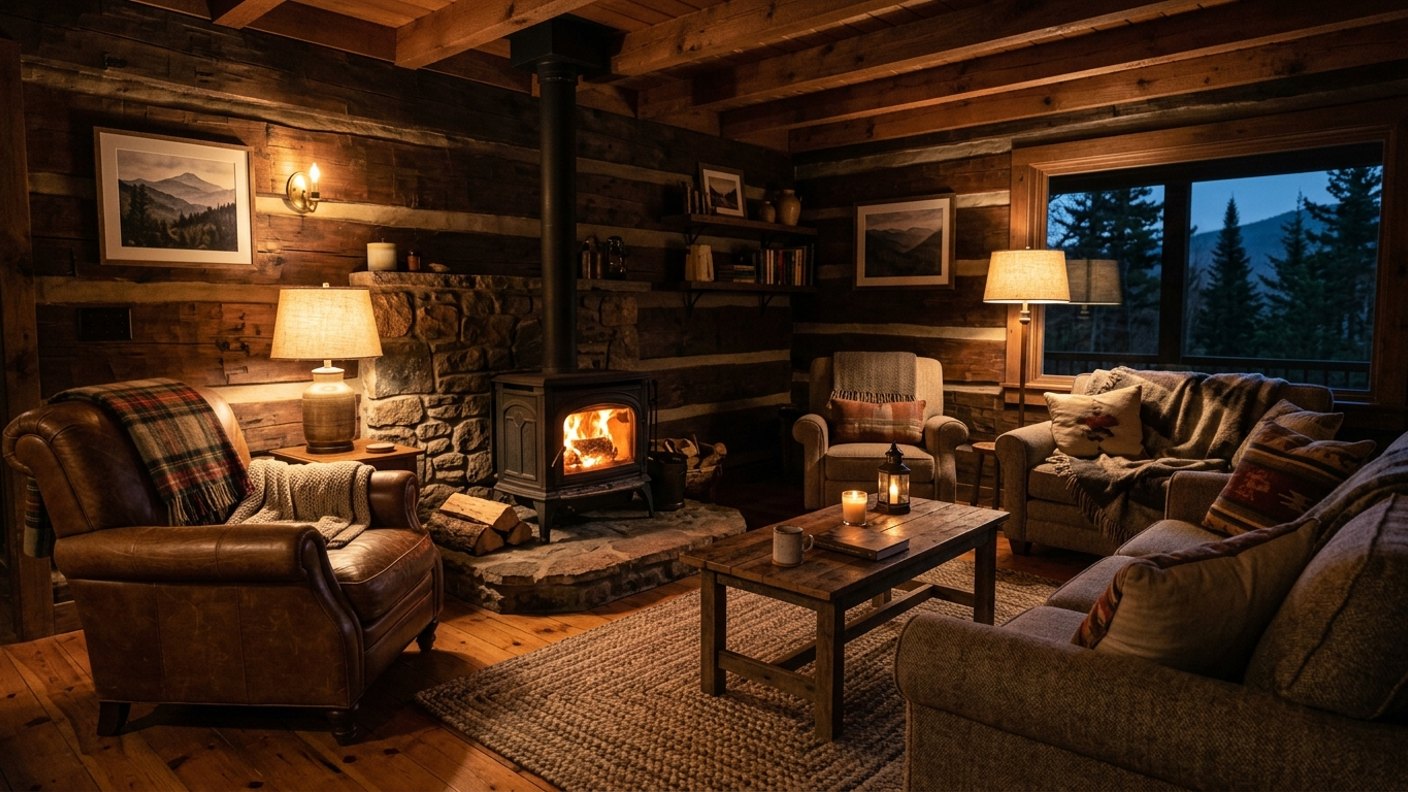
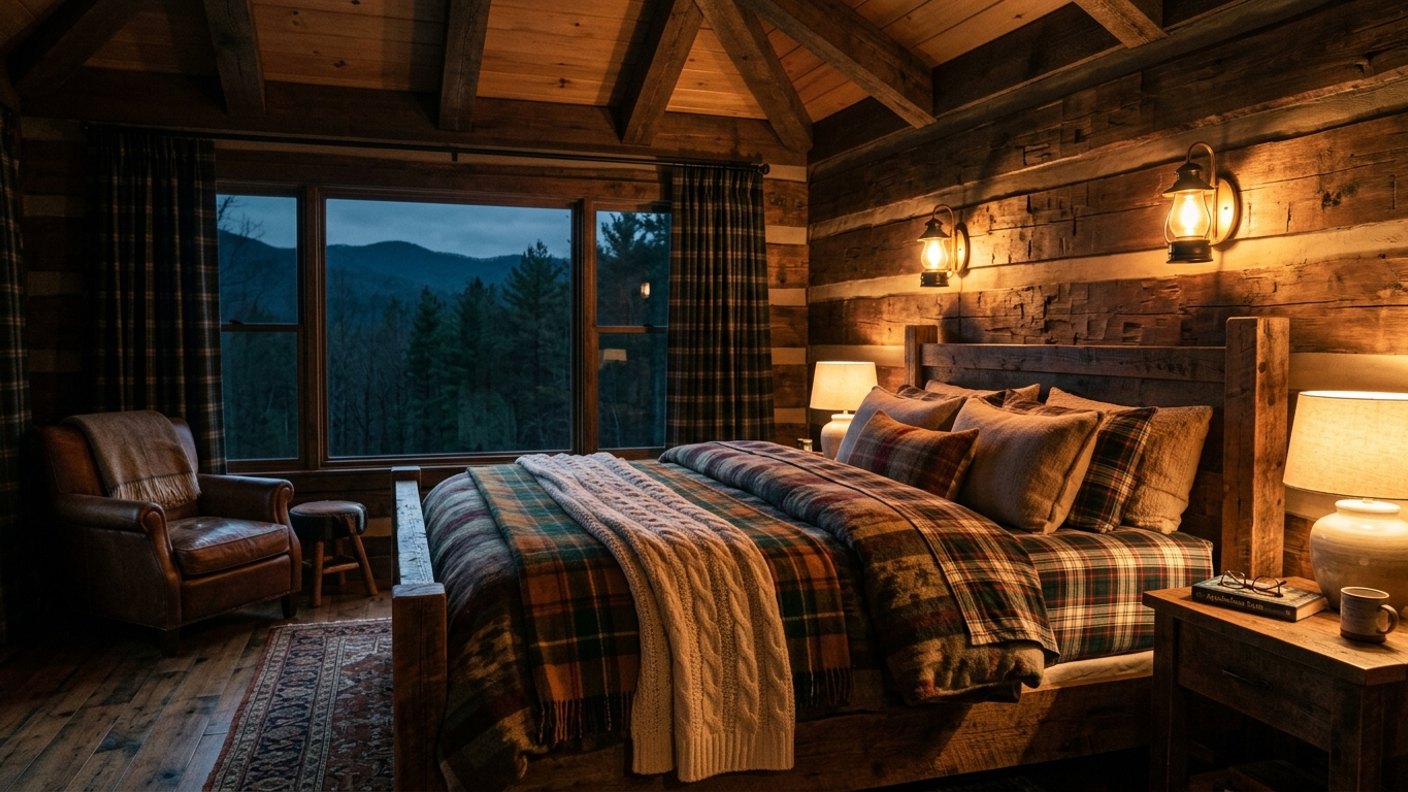
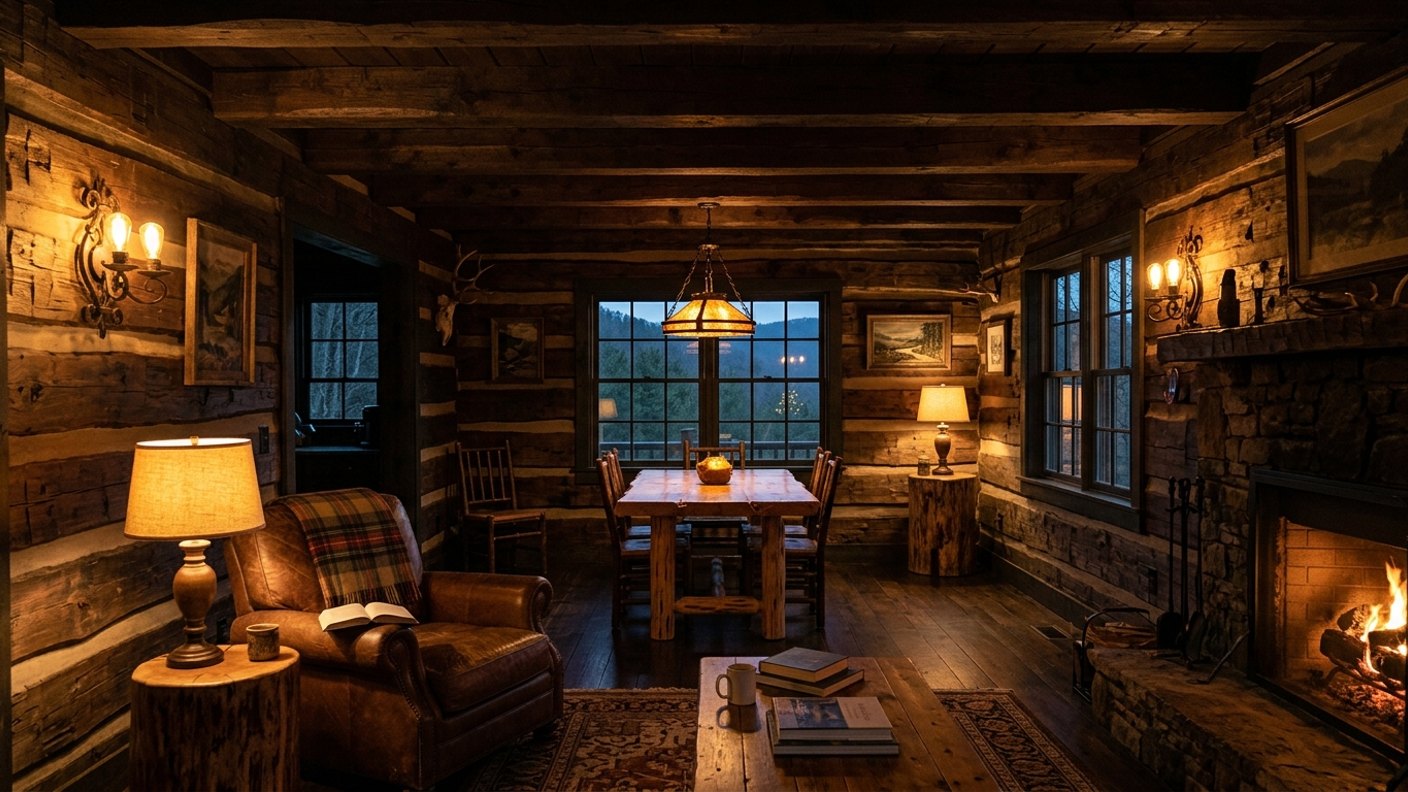
The fix is layering, warm light from several sources at different heights instead of one from the ceiling. Wall sconces at eye level, table and floor lamps down low, and a low warm pendant for the centre. Each source fills the shadows the others leave, and the room gains depth and warmth instead of flat gloom. Three to five warm sources in a main room turn a cave into a glow. Layering is the whole secret.
Sconces Love Wood Walls
Wall sconces are a cabin's best friend specifically because they wash light up and down the wood, catching the grain. And they look completely at home on a log or timber wall. They also add the crucial eye-level layer most cabins are missing. Where there's no circuit behind the wall, common in cabins, plug-in and rechargeable versions give you the same glow with no destructive wiring through solid logs.
Warm Bulbs, No Exceptions
Every bulb goes warm, 2700K, full stop. Warm light makes wood glow and skin look good; cool light makes both look grey and clinical, which is fatal in a cabin. And I keep every bulb in a room the same warm temperature, because one cool bulb among warm ones is a visible clash. If you change only one thing in a dark cabin, swap every bulb to warm 2700K and watch the whole place thaw.
Help the Light Along
Beyond fixtures, I help the available light go further, lightening the surfaces around the wood, adding glazing where the structure sensibly allows, using light warm-toned textiles. And placing a mirror or two to bounce daylight deeper in. None of these replaces good warm fixtures, but together they make a dark cabin work less hard to feel bright. Small moves that stretch every lumen add up in a wood interior.
Add Dimmers
Cabins want different light at different times, bright enough to cook and work, low and golden for a winter evening by the fire. Dimmers (or dimmable bulbs) give you both from the same fixtures, so the cabin can be practical by day and intimate at night. A dimmed warm cabin in the evening is one of the coziest things there is, and it costs almost nothing to make possible. Control is part of good cabin lighting.
The Transformation
Get this right, warm bulbs, layered sources, sconces on the wood, dimmers, a little help from lightened surfaces and mirrors. And a cabin that felt like a gloomy cave becomes warm, deep, and glowing, the kind of room you don't want to leave on a cold night. No other change does as much for how a cabin feels for as little money. Lighting is the thing almost everyone gets wrong, and the easiest thing to get gloriously right.
Gear & lighting in this post: warm wall sconces and plug-in wall sconces