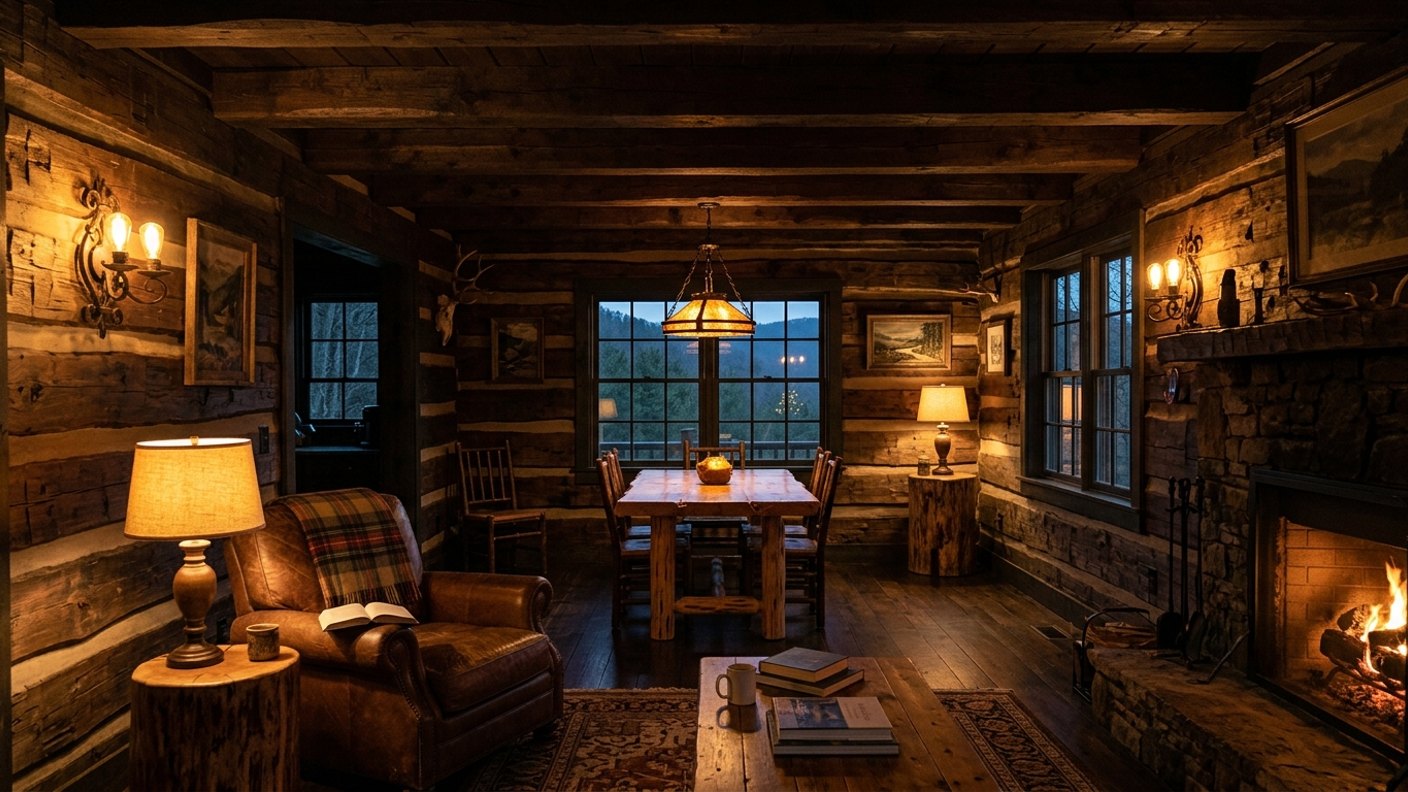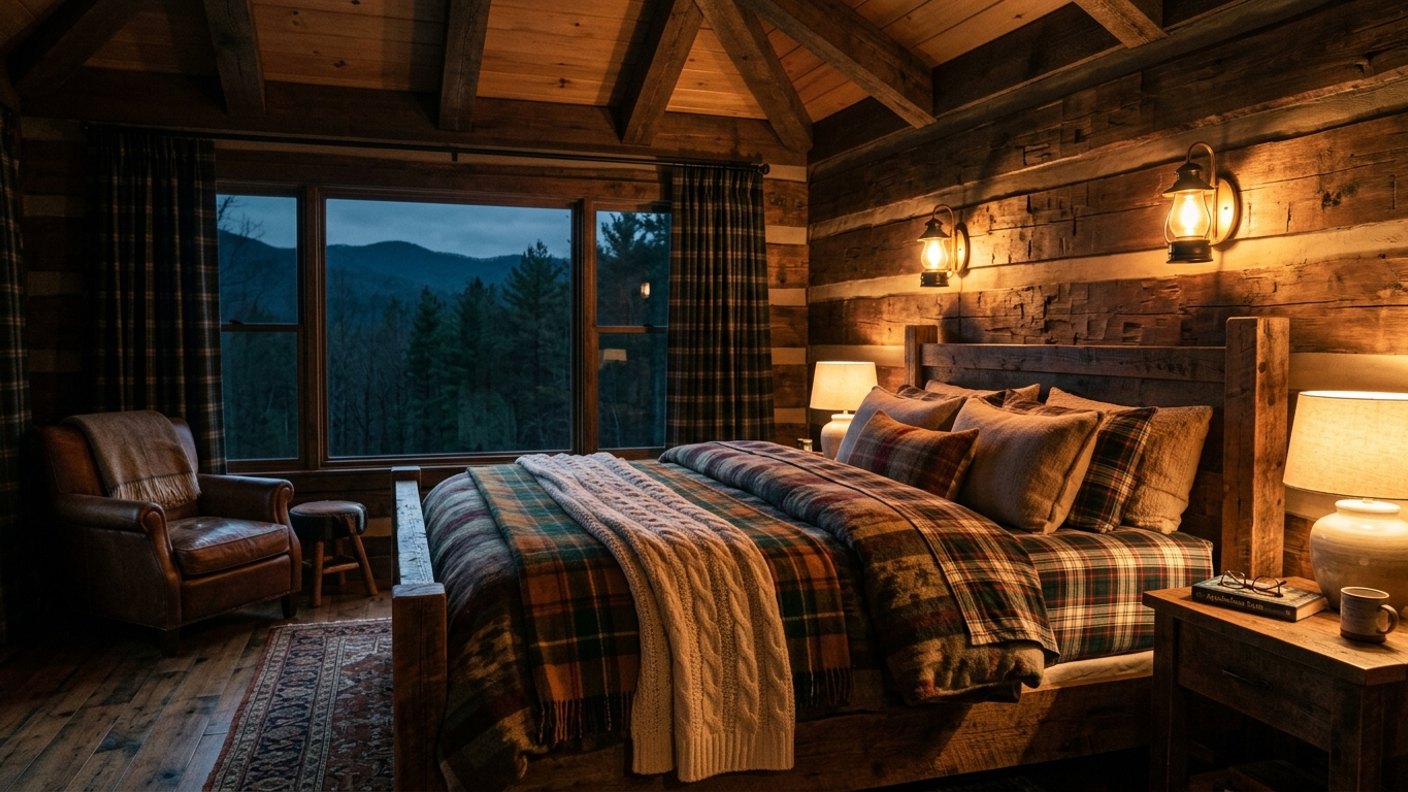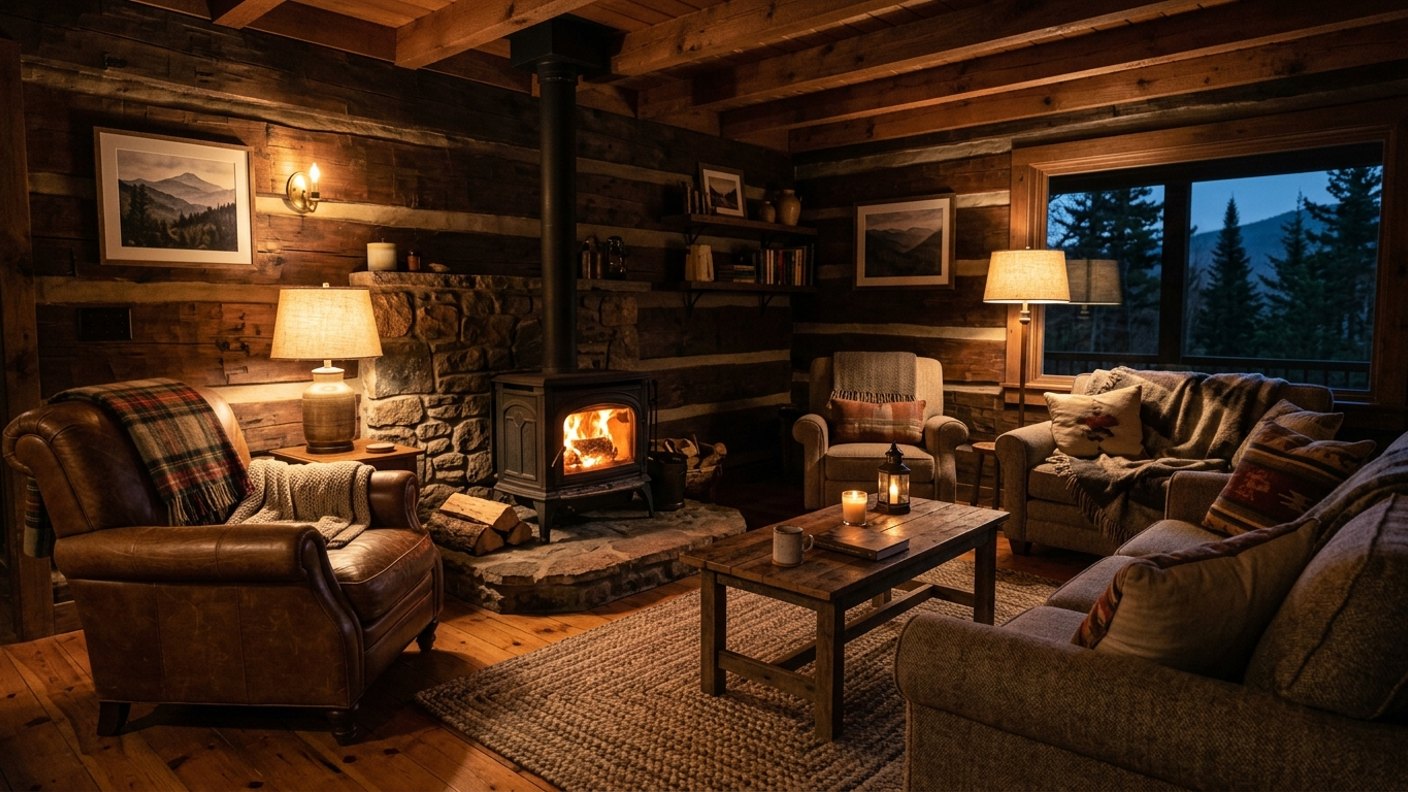
A cabin living room has one job: pull you in and not let you leave. It's where the winter evenings happen, where the fire is, where the whole point of having a cabin actually plays out. Get it right and it's the coziest room you'll ever sit in; get it wrong and it's a cold wooden box with a TV. Here are the cabin living room ideas I come back to for a room that actually feels warm.
Build It Around the Fire
The wood stove or fireplace is the heart of a cabin living room, so everything orients toward it. I arrange the seating in a gathering circle facing the fire, not pushed against the walls, so the room pulls people together toward the warmth. A cabin living room built around a well-set stove more or less designs itself. The fire tells the furniture where to go, and the room follows.
Layer Wood, Wool, and Leather
Warmth in a cabin is as much about texture as temperature. I layer natural materials. The wood that's already there, plus wool throws, leather seating, sheepskin, linen. So the room is rich and tactile. These honest natural textures are what make a cabin living room feel cozy and grounded rather than flat. The more warm, touchable layers, the more the room wraps around you.
A Warm, Earthy Palette
I keep the colours warm and drawn from nature, creams and warm whites to lighten the wood, deep greens, rusts, browns. And charcoals for depth, and the natural tones of leather and stone. Cool or stark colours fight a cabin's warmth, so they stay out. A warm, earthy palette ties the room to the woods outside and gives all that wood something cohesive to live in.
Lots of Lamps, Low and Warm
This is the big one: a cabin living room needs warm light at several low levels, not one bright overhead. I scatter table lamps and a floor lamp or two around the seating, all warm 2700K, ideally on dimmers. Several pools of low warm light are what make the room glow at night and make you want to stay in it. Lamplight, not ceiling light, is the soul of a cabin living room after dark.
A Rug to Anchor It
A good rug anchors the seating arrangement, warms the floor underfoot, softens the hard surfaces, and pulls the whole gathering circle together. In a cabin I choose something durable and warm-toned that can take real life. The rug grounds the room and adds another layer of warmth and texture, without it, the furniture can feel like it's floating on a cold floor. It's a quiet but essential piece.
Comfort Over Looks
A cabin living room is for sinking into, so comfort wins over a stiff, photogenic look every time. I choose comfortable seating you'd happily spend a whole snowy day in, then make it look good, not the other way around. The most beautiful cabin living room is worthless if nobody wants to actually sit in it. Comfort is the whole point; the rest serves it.
Let the Windows Do Their Job
By day, the view is the best thing in the room, so I keep window treatments simple and let the woods pour in. A cabin living room should connect to what's outside. The trees, the light, the seasons. So I don't bury the windows in heavy drapes. By day the landscape lights and decorates the room for free; by night the warm lamps take over. Both halves matter.
The Feeling Test
My test for a cabin living room is just the feeling when you walk in on a cold evening: does it pull you toward the fire and a lamp-lit chair, or leave you cold? Warm fire, warm textures, warm earthy colours, and lots of low warm light, get those right and the room does exactly what a cabin living room is for. It makes you not want to be anywhere else.
Gear & lighting in this post: warm table lamps and floor lamps for the living room