A cabin kitchen has a hard brief: it has to be tough enough for muddy, hungry, real cabin life, warm enough to suit the building. And usually small enough to test your planning. It cooks for a crowd after a day outside, takes spills and abuse, and still needs to feel like part of a cabin and not a utility room. Here's how I make a cabin kitchen that works as hard as the life around it.
Function First, But Never Cold
A cabin kitchen earns its keep by working. But it can't be cold and clinical doing it. So I lead with durable, practical function and then make sure warmth comes right behind it: honest materials, warm wood, good light. The trap is a kitchen so focused on being tough and wipeable that it feels like a workshop. Function first, warmth always, both, not one.
Surfaces That Take Abuse
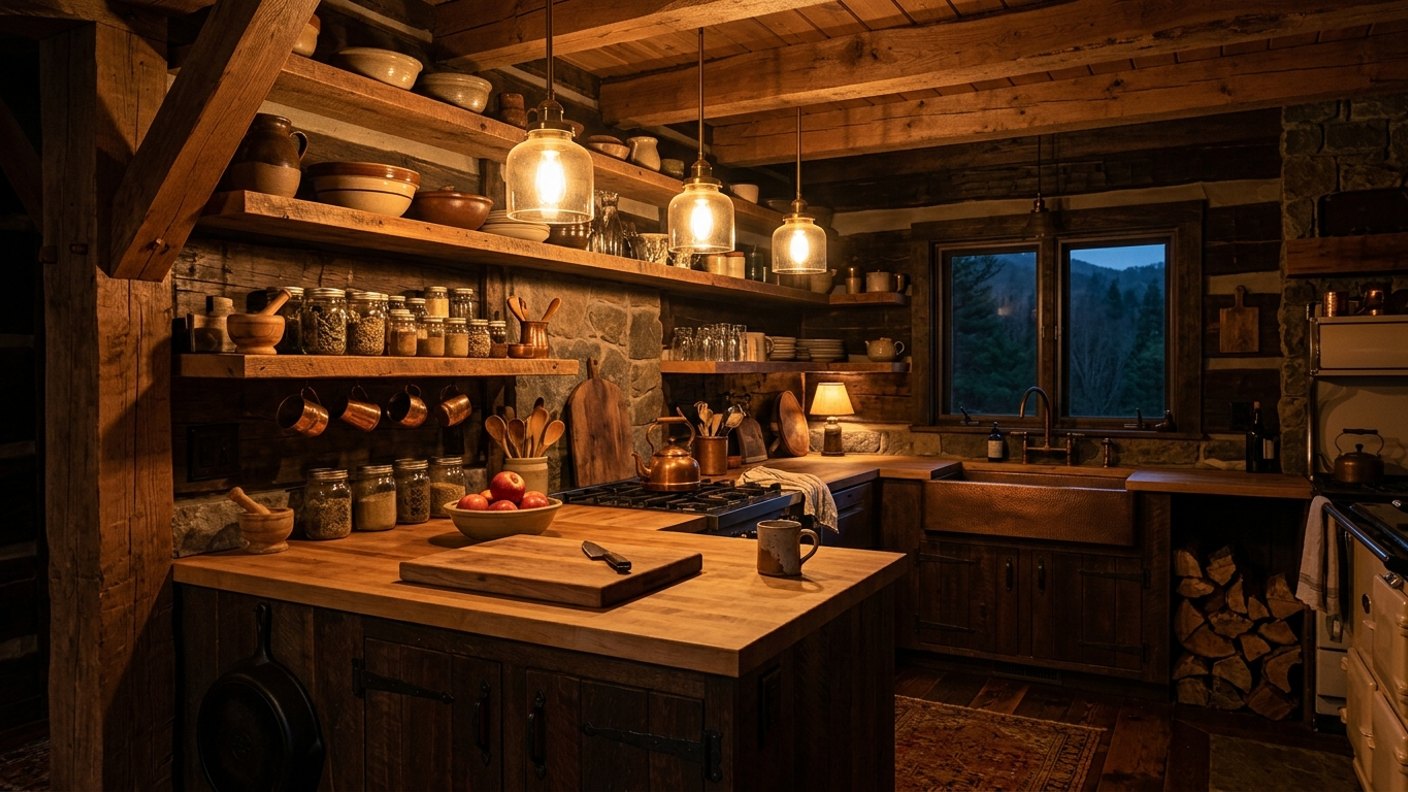
Cabin kitchen surfaces get worked hard, so I choose durable, forgiving, characterful ones, butcher block and solid wood for warmth, sealed stone or quartz where I need toughness, hard-wearing floors that take mud and spills. The bonus in a cabin is that a little honest wear looks right, so natural materials that age gracefully beat pristine surfaces that show every mark. Durable and warm, aging well, is exactly the cabin brief.
Open Shelves and Warm Wood
Open shelving in warm wood suits a cabin perfectly. It fits the rustic character, keeps a small kitchen feeling open, and puts everyday things in reach. I'll mix it with some closed storage for the stuff that shouldn't be on show, but the open, woody, slightly lived-in look is right for a cabin. It reads as a working kitchen in a cabin rather than a glossy showroom dropped in the woods.
Warm Pendants Over the Counter
Lighting makes or breaks a cabin kitchen. I hang warm pendants over the counter or island for focused, characterful light, add warm under-shelf task lighting so I can actually see what I'm chopping, and fill in with sconces, all warm 2700K. You need genuinely good task light to cook safely, layered with warm ambient light so the kitchen still feels like a cabin. A single cool overhead turns a cabin kitchen into a garage.
A Tight Work Triangle
Cabin kitchens are usually small, so the layout has to be efficient, a tight, sensible work triangle between sink, stove, and fridge, with everything in easy reach. When a small kitchen is planned well, it cooks better than a big sprawling one because nothing's a hike away. I sweat the layout in a cabin kitchen precisely because the space won't forgive a lazy one. Efficiency is what makes small work.
Storage That Goes Up
With little floor space, I send storage upward and onto the walls, shelves, rails, hooks, hanging pots, to keep the counters clear and the floor open. Clear counters are what let a small cabin kitchen actually function, and vertical storage is how you get them. In a cabin, hanging and open storage also happens to look right, so the practical move and the handsome one are the same.
Right-Sized Appliances
I scale the appliances to the cabin and the cooking, not to a suburban fantasy, apartment-sized where it suits, full-sized only where it earns the room. Oversized appliances eat a small cabin kitchen alive and rarely get used to capacity. Right-sizing them frees space for the storage and counter you actually need, and keeps the kitchen in proportion with the cabin. Fit the appliances to the life, not the showroom.
Make It Somewhere to Linger
For all the function, a cabin kitchen is often where people gather after a day outside. So I make it somewhere you'd want to linger, warm light, a spot to perch, the smell of something on the stove. Tough and efficient gets the work done; warmth and good lighting make it the heart of the cabin alongside the fire. A cabin kitchen that works hard and still pulls people in is the one that's done right.
Gear & lighting in this post: kitchen pendant lighting and warm wall sconces