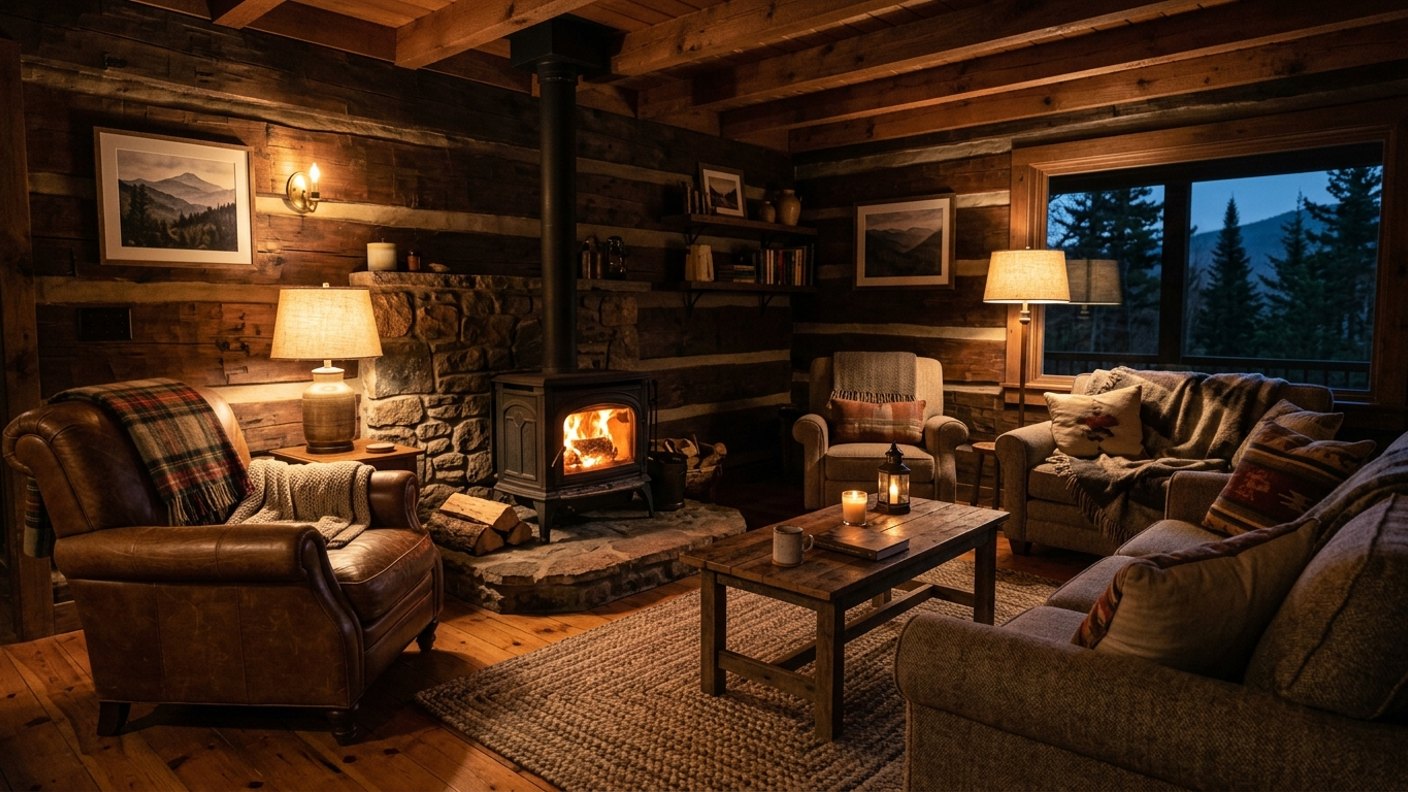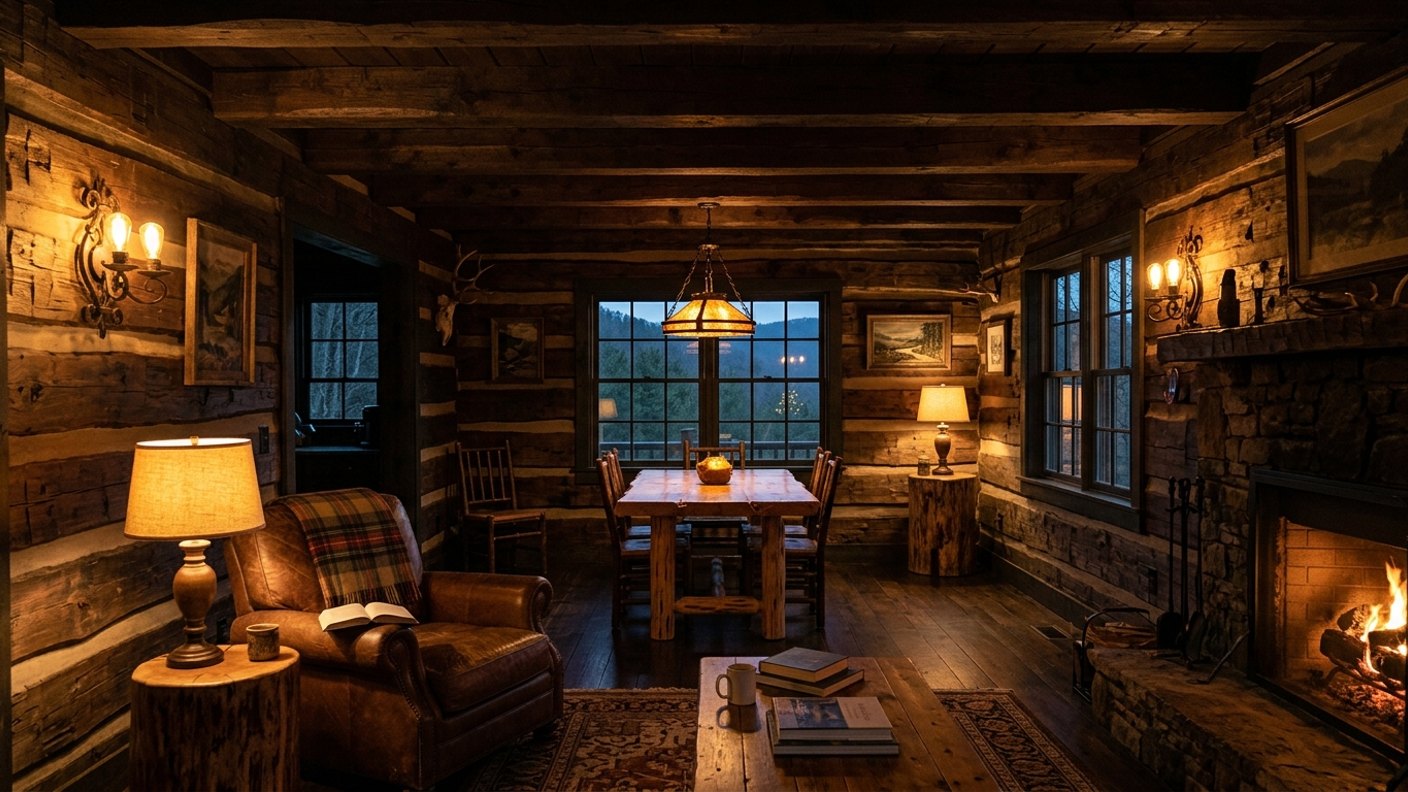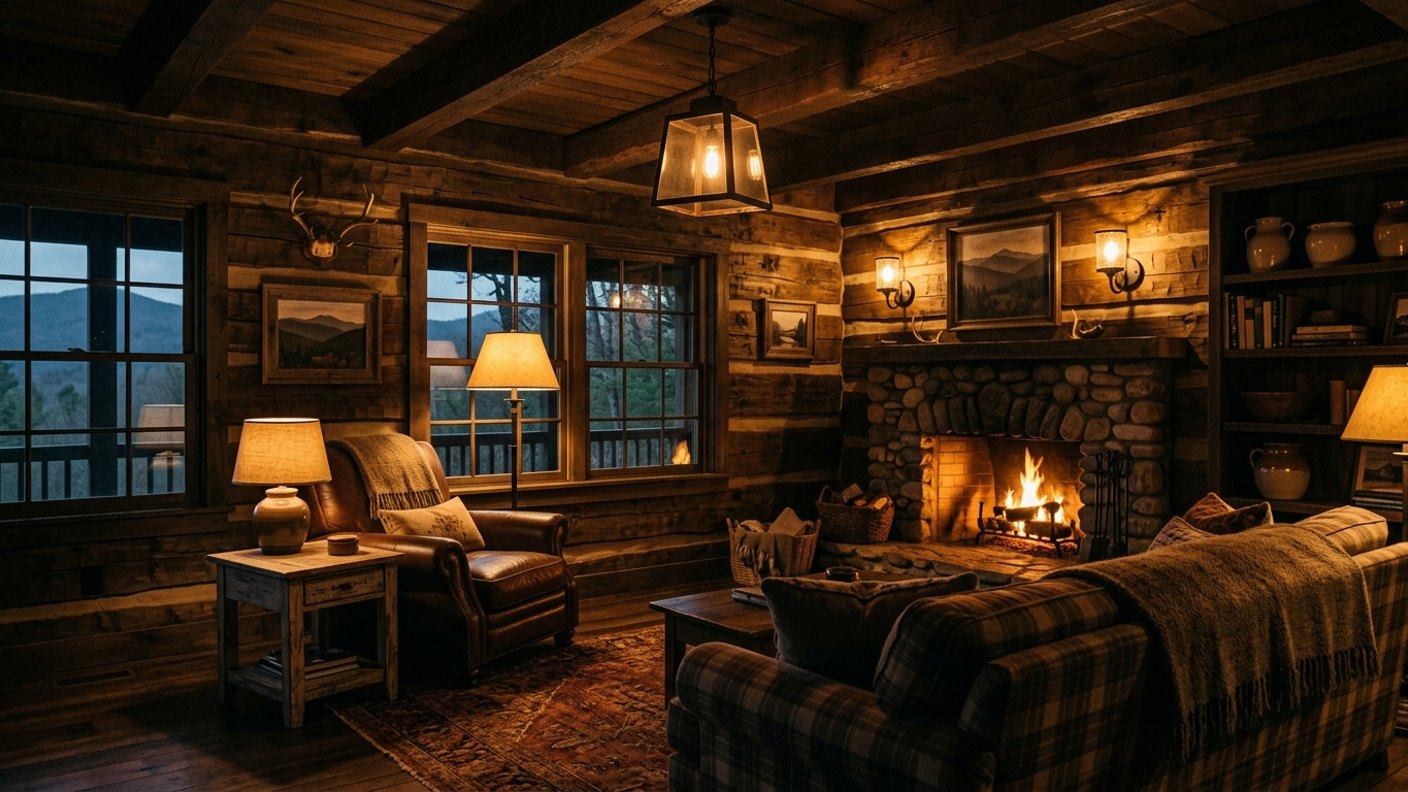
The difference between a cabin that glows and one that just has lights in it is layering. Great cabin lighting is never one fixture doing all the work. It's the lantern, the lamp, and the fire, several warm sources at several heights, each doing a different job. Once you understand the layers, you can light any cabin to glow from corner to corner. Here's how I do it.
One Fixture Is Never Enough
The root of bad cabin lighting is asking one fixture to do everything, usually a lone overhead. And wood interiors punish that harder than anywhere. Light is a system of layers, not a single switch. The moment you stop expecting one source to light a whole cabin and start thinking in layers, the lighting gets dramatically better. Everything below is just the layers and how they stack.
Ambient: The Background Glow
The first layer is ambient. The general background light that fills the room. In a cabin that's a warm pendant or two and any general fixtures, kept warm and never harsh. Ambient light sets the base level so no part of the room falls into gloom, but it's only the foundation. On its own it's flat; its job is to be the warm canvas the other layers paint on. Get it warm and gentle, then build up.
Task: Light to Work By
The second layer is task, focused light where you actually do things. Over the kitchen counter, beside the reading chair, at the bed, at a desk. Task light has to be genuinely bright and well-placed so you can cook, read, and work safely, but still warm so it doesn't break the cabin's mood. Good task lighting is what makes a cabin functional; without it, a cozy cabin is also a frustrating one to actually use.
Accent: The Magic Layer
The third layer is accent, light that highlights and adds atmosphere rather than just illuminating. In a cabin this is sconces washing light up and down the wood and catching the grain, lamps glowing in corners, light that makes the materials sing. Accent is the layer that turns adequate lighting into beautiful lighting. It's also the eye-level, human-height layer most under-lit cabins are completely missing.
The Fire Is a Layer Too
In a cabin there's a fourth layer the textbooks don't mention: the fire. A wood stove or fireplace throws warm, flickering, low light that no fixture replicates, and it's pure atmosphere. I light the rest of the cabin to complement the fire, not compete with it, warm and low enough that when the fire's going, everything works together. The fire is the soul of cabin light; the fixtures are there to support it and carry on after it dies down.
Stack the Heights
The trick that ties the layers together is height. I put light at the ceiling (pendant), at eye level (sconces), and down low (table and floor lamps). So the warm light comes from everywhere and the room gains depth. A cabin lit at one height is flat; a cabin lit at three or four glows and feels dimensional. Stacking the heights is what makes layered lighting actually look layered rather than just numerous.
Warm and Dimmable Throughout
Every layer is warm 2700K, mixing colour temperatures wrecks the whole effect. And as much of it as possible is dimmable. Dimmers let the same layered system go bright and practical for cooking, then low and golden for a fire-lit evening. Warm, consistent, dimmable light across all the layers is what lets a cabin shift from working space to glowing refuge at the turn of a dial. Consistency and control finish the job.
The Glow Is the Goal
Put it together, ambient base, task where you work, accent on the wood, the fire's flicker, all warm, stacked at several heights, and dimmable. And a cabin glows from corner to corner with depth and warmth no single fixture could ever manage. The lantern, the lamp, and the fire, working as a team. That's the whole art of cabin lighting, and it's the difference between a cabin with lights and a cabin that genuinely glows.
Gear & lighting in this post: wood pendant lights and warm wall sconces
My friend Clara over at The Elmwood Home layers light beautifully in her coastal rooms, totally different palette to my dark cabins, exact same principle: never let one fixture do all the work.