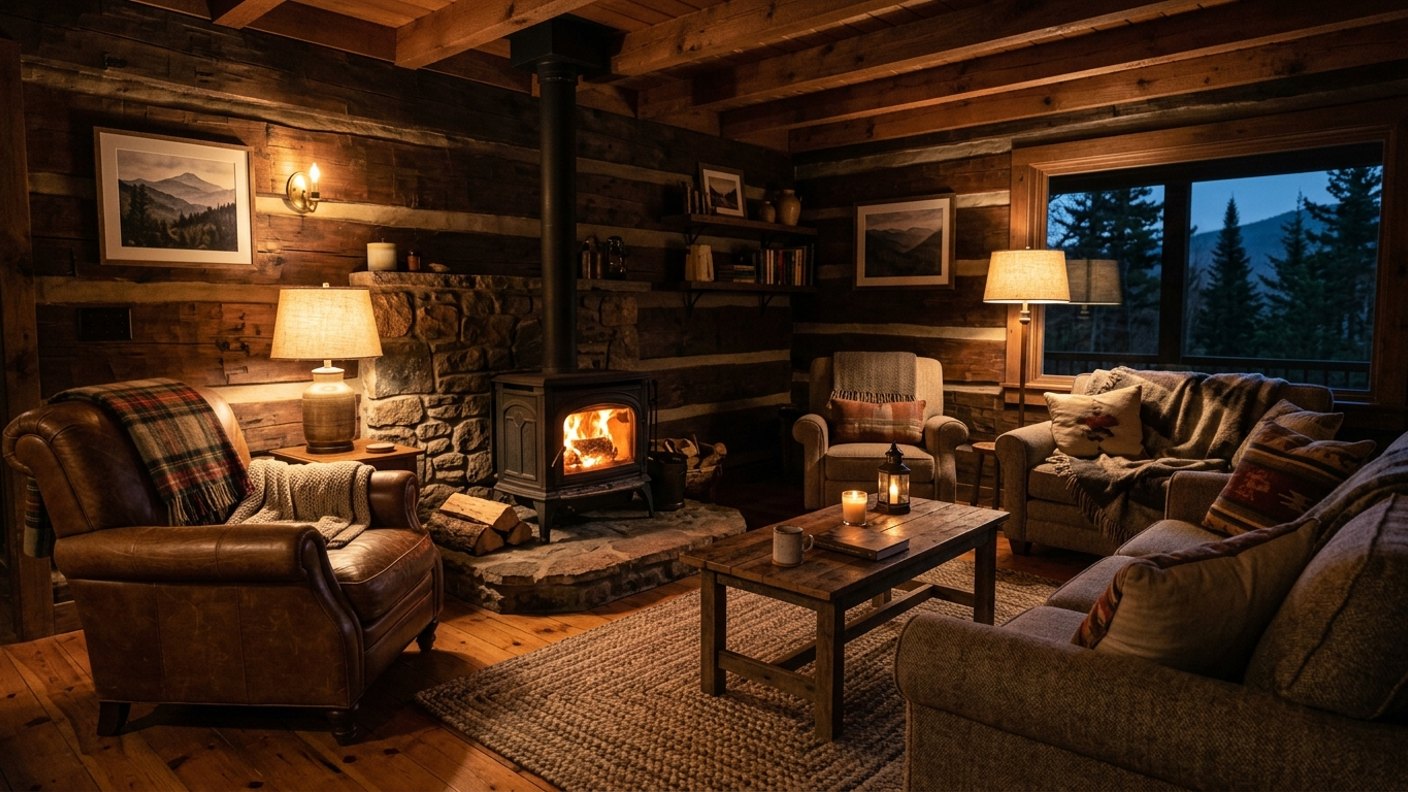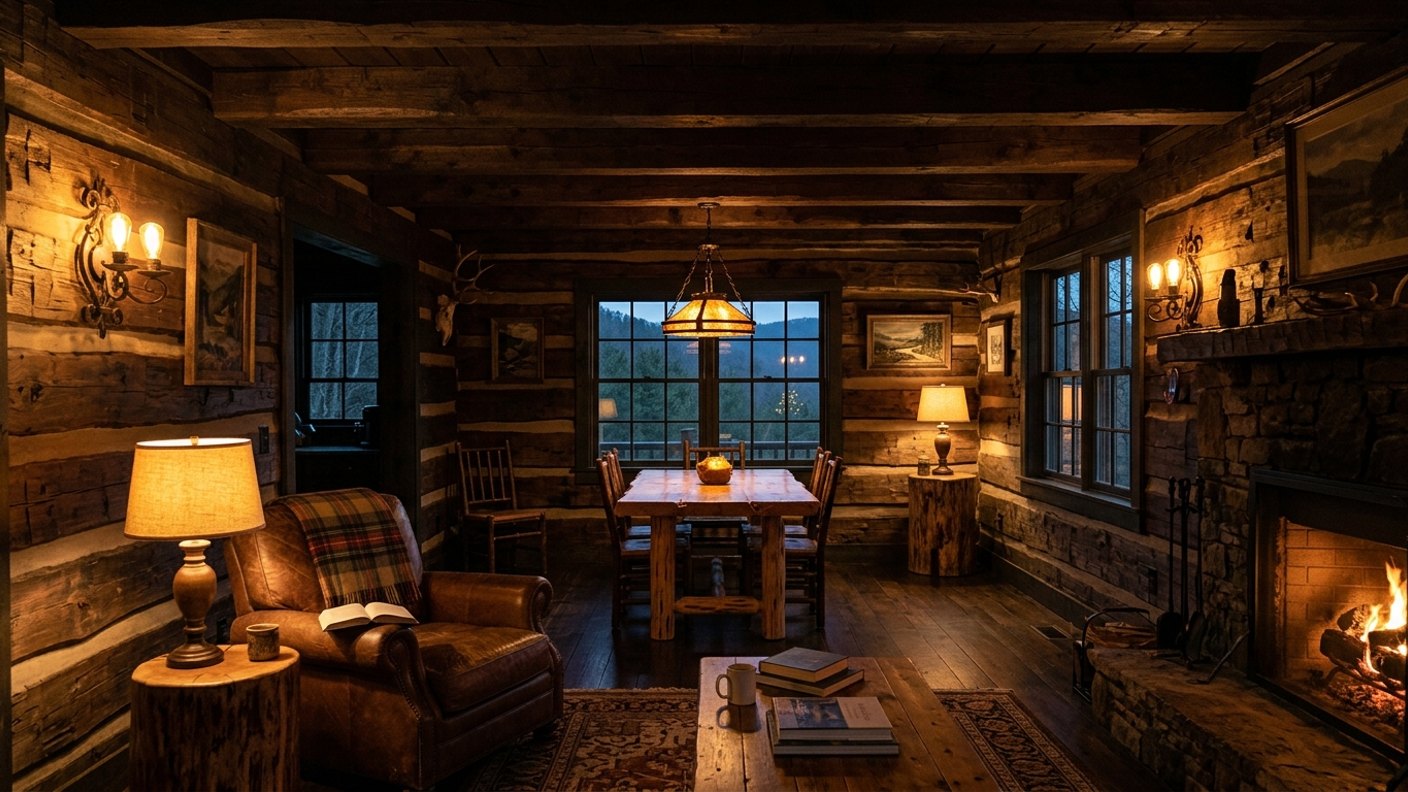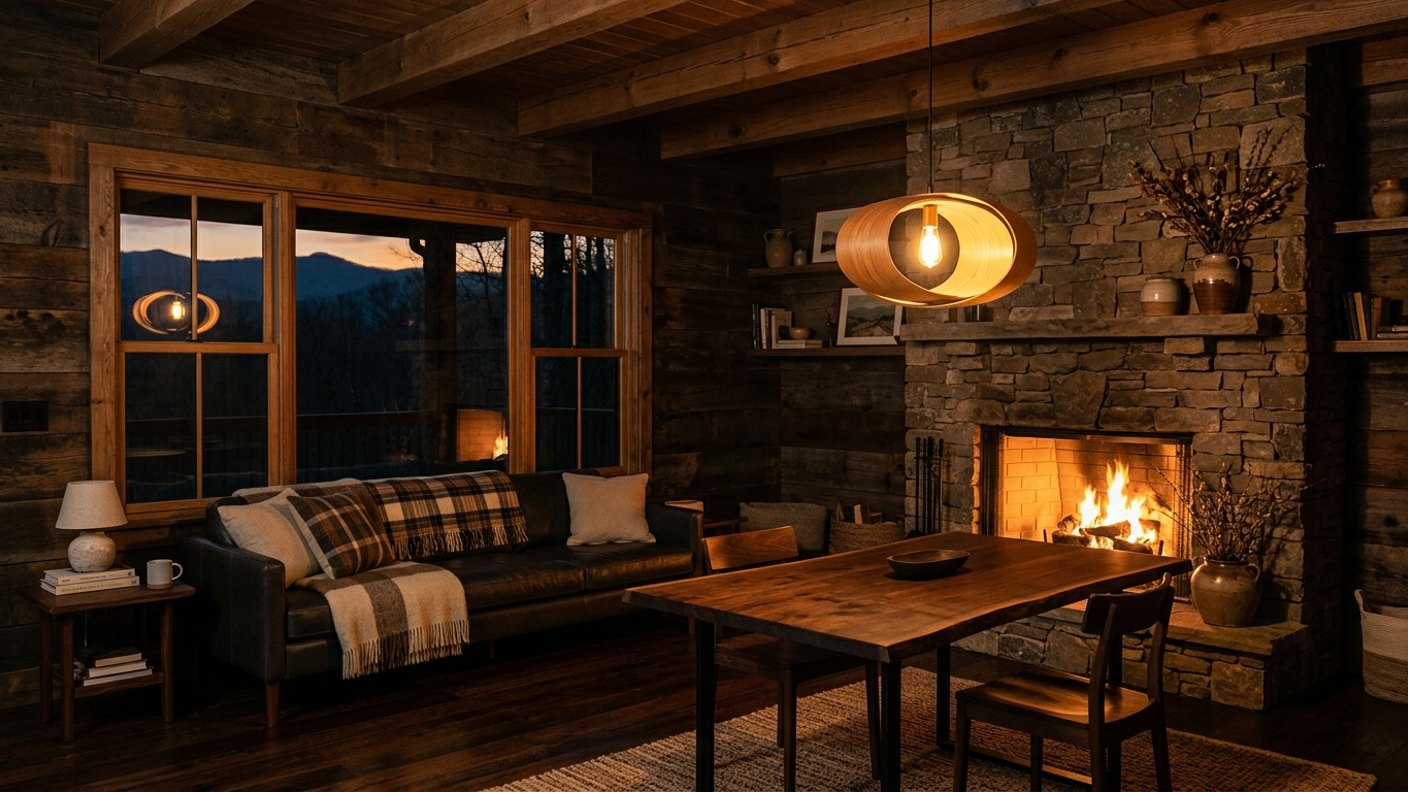
Modern rustic is what you get when you take cabin warmth, strip out the kitsch, and calm the clutter down. The honesty and natural materials of rustic with the clean restraint of modern. It's my favourite way to do a cabin interior, because it lets the building be warm and characterful without tipping into theme-park or hoarder's-cabin territory. Here's how I strike the balance.
What Modern Rustic Actually Means
Modern rustic isn't a contradiction, it's a blend: you keep the wood, stone. And texture that make a space warm, and you bring in the clean lines, restraint, and simplicity that make it feel current. Rustic supplies the warmth and soul; modern supplies the discipline. Get the proportions right and a cabin feels grounded and cozy and uncluttered and current. The best of both, fighting neither.
Keep the Warmth, Lose the Clutter
The single move that defines modern rustic is editing. Traditional rustic tends to pile it on. Every surface decorated, every wall hung. Modern rustic keeps the warm materials but calms the clutter way down, letting the wood, stone, and a few good pieces breathe. The warmth stays; the visual noise goes. That edited calm is most of what makes a cabin read modern rather than busy.
Clean Lines Against Natural Texture
The magic of modern rustic is the contrast, clean, simple forms set against rich natural texture. A sleek sofa against a rough stone wall, a minimal kitchen against warm wood, straight lines against the irregularity of timber. That tension between modern restraint and rustic texture is what gives the style its energy. Too much of either alone goes flat; the contrast is where it comes alive.
Lighting That Bridges Both
Lighting is one of the clearest ways to signal modern rustic. I choose fixtures that bridge both worlds, clean, simple modern forms in warm materials, like a wood pendant or a modern sconce, all on warm 2700K bulbs. The form is modern and uncluttered; the warmth and material keep it rustic. Warm, well-chosen modern lighting does the modern-rustic balance in a single object, which is why I lean on it so hard.
A Warm, Restrained Palette
I keep the palette warm but tight, warm whites and greiges as a clean modern base, with wood tones, black accents, and a few deep natural colours for depth. The restraint reads modern; the warm natural tones read rustic. A busy palette would tip it back toward traditional and chaotic, so I hold the colours to a disciplined, warm, natural few. The tightness is doing modern work; the warmth is doing rustic work.
Fewer, Better Pieces
Modern rustic rewards quality over quantity, a few well-made, characterful pieces rather than a room full of stuff. I choose honest materials and let each piece have room to be seen, which suits both the modern love of restraint and the rustic love of craft. Fewer, better things also keep a cabin from feeling cluttered, which is the constant risk on the rustic side. Edit hard, buy well.
Let the Architecture Lead
In a cabin, the building itself. The beams, the logs, the stone, is the strongest rustic element, so I let it lead and keep everything else modern and restrained around it. The architecture supplies all the rustic character you need; the furnishings just have to be warm, simple, and out of its way. Leaning on the building's natural character means the rest can be clean without the room ever feeling cold.
Why It Works in a Cabin
Modern rustic suits cabins, and small cabins especially, because its restraint keeps the space open and current while its warm materials keep it cozy. You get a cabin that feels like now without losing an ounce of warmth, no kitsch, no clutter, no cold minimalism either. It's the sweet spot between the two failure modes most cabins fall into, and warm lighting is the thread that holds it together.
Gear & lighting in this post: a wood pendant and modern wall sconces
My friend Ava at The Marlowe House does the mid-century version of this same clean-but-warm balance, proof that 'modern but not cold' is a skill worth stealing whatever your style.