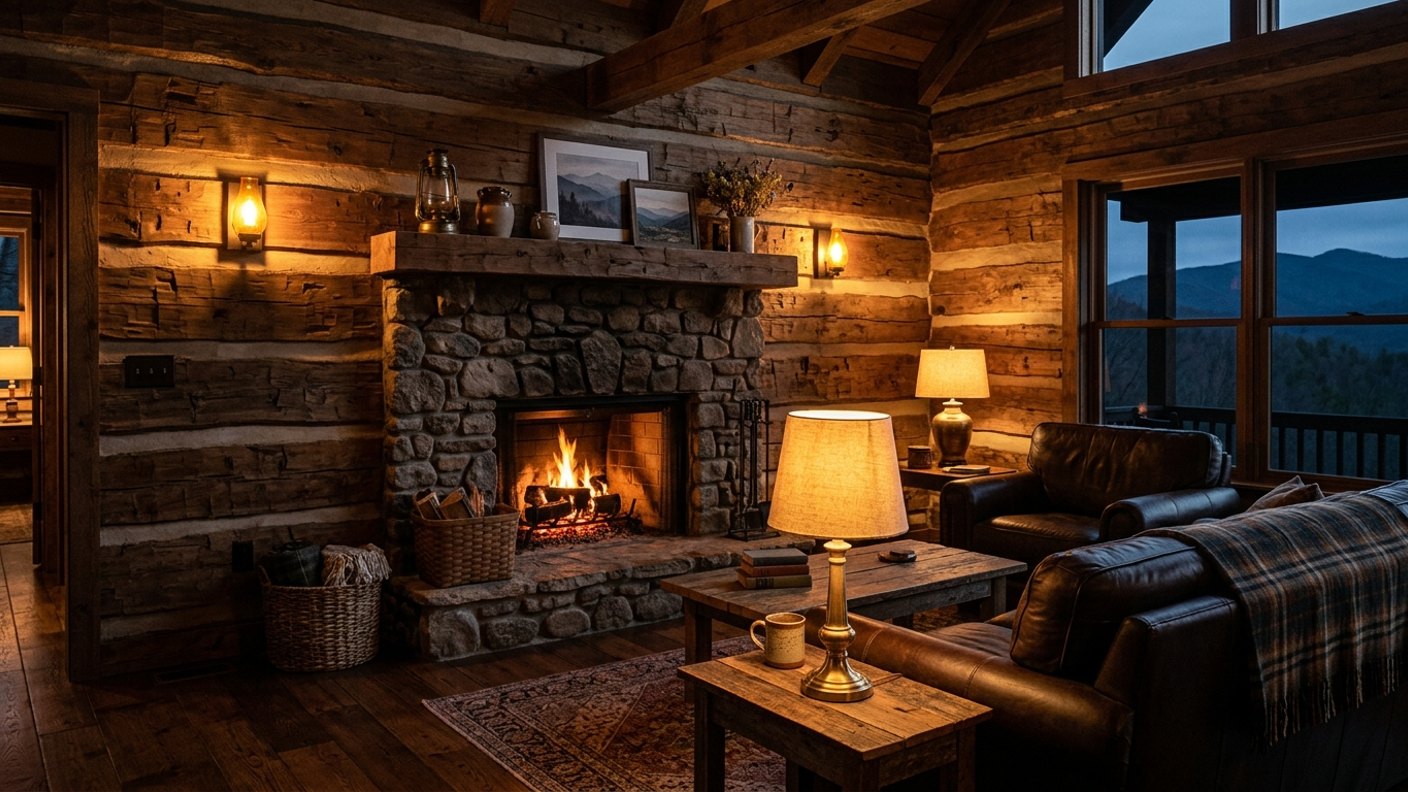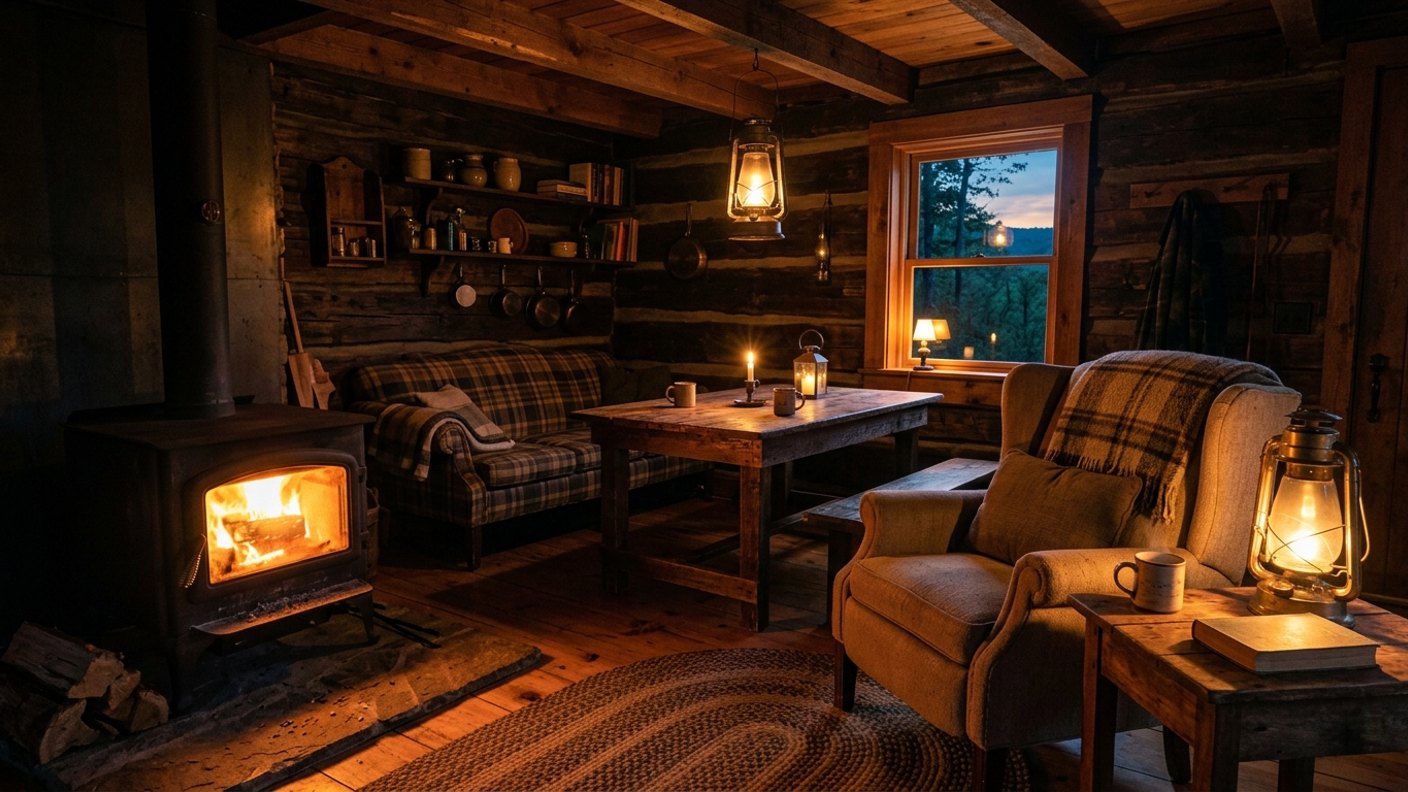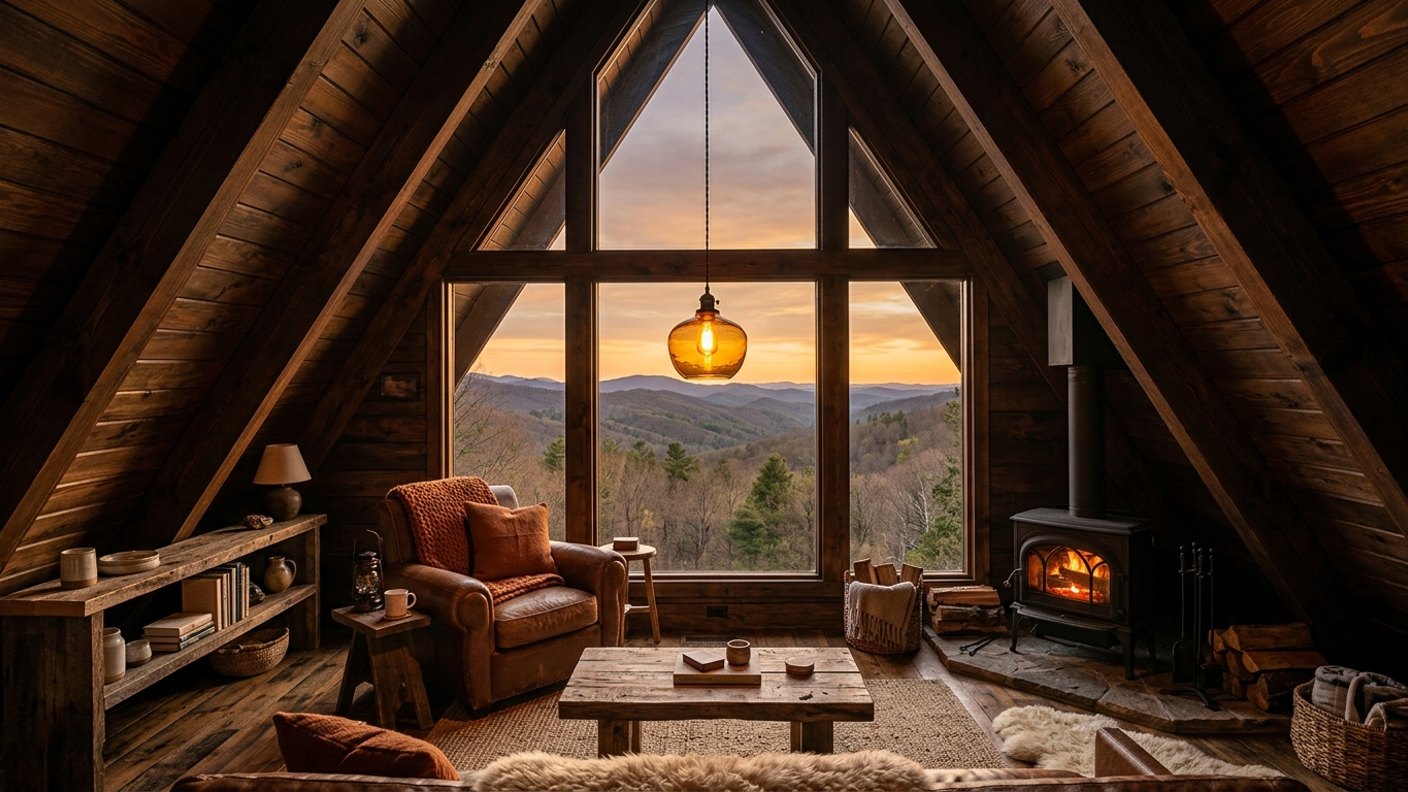
The A-frame that started all of this cost about $90,000, less than a used truck around here, and looked it. Rotten deck, a roof that had been politely leaking for a decade, brown shag, wood paneling so dark you needed a headlamp at noon. And a smell I won't describe. I bought it two months after my marriage ended, moved in with a sleeping bag and a circular saw. And learned how to renovate a cabin by getting it wrong on this one first. Here's the whole thing, honestly.
What I Actually Bought
What I bought was a sound A-frame wearing forty years of bad decisions. That's the key thing. The frame, the roof line, and the footings were solid. Everything wrong with it was cosmetic or water-related, which is exactly the cabin you want. A scary-looking A-frame with good bones sells cheap because most buyers can't see past the shag carpet. I couldn't see much past it either, but the price made me brave.
Water First, Pretty Later
The first month was all roof and envelope, unglamorous, invisible, and the only thing that mattered. I stopped the leaks, replaced failed flashing, and got the building dry before I let myself touch a single thing I actually wanted to do. Every cabin I've done since follows the same order: stop the water, make it dry and sound, then earn the fun parts. Skip that and you'll finish a beautiful room that has to come back out.
The Wood Stove Went In Next
Heat came before finishes. A cabin in the Blue Ridge without real heat is a tent, so a good wood stove went in early, set on a proper hearth. It changed the whole place immediately, suddenly the cabin was somewhere you could be, not just somewhere you were fixing. I'll always put heat in before I worry about how a room looks.
Killing the Darkness
The A-frame's gift and curse is that soaring dark ceiling. I kept the wood I loved but lightened the lower walls so the place didn't feel like the inside of a guitar. And cleaned up the big gable window so it could do its job. Then I did the thing it took me years to learn matters most: I layered in warm light. A wood pendant down low where you actually live, not stranded up in the rafters.
Lighting Without Rewiring the World
The original wiring was a horror show, and I wasn't ready to open every wall. So a lot of the early lighting was plug-in sconces and lamps, warm, eye-level, no electrician required. That turned out not to be a compromise at all. Warm light down at human height is what makes a tall dark A-frame feel cozy instead of cavernous. And plug-in fixtures let me put it exactly where I wanted it.
Floors That Could Take a Beating
Out went the shag, in went a hard-wearing wood floor that could handle muddy boots, a wet dog, and dropped tools, because a cabin floor lives a hard life. I learned fast that in a cabin you choose floors for what they survive as much as how they look. Warm wood tones that hide a scuff and take a beating are the move.
The Kitchen and Bath, Refreshed
I didn't rip the kitchen out, I brought it back, new open shelving, a deep sink, warm hardware, and good light over the counter. Same with the bath. Refreshing instead of replacing is most of how you renovate a cabin without spending like it's a city condo. And in a cabin a little honest wear actually looks right.
What It Gave Back
By the time it was done, the A-frame was warm, dry, lit like somewhere you'd want to spend a winter, and worth multiples of what I paid. But the bigger thing is that finishing it convinced me I could do this again, and that I wanted to. The cabin came back to life and, not to be dramatic about it, so did I. Everything since started with this one.
Gear & lighting in this post: a warm wood pendant and plug-in wall sconces
My friend Michelle, who restores a historic single house over at The Wharton House, would've talked me out of half my early mistakes. Different building entirely, same lesson: keep what's good, fix what isn't, don't get clever.