Everyone wants a cozy cabin, but almost nobody can tell you what 'cozy' actually is. It gets used like a vibe you either stumble into or don't. After seven cabins, I've learned it's nothing so mysterious, coziness is a set of specific, repeatable ingredients, and you can build the feeling on purpose. Here's what actually makes a cabin cozy, from someone who does it for a living.
Coziness Is Built, Not Found
The first thing to understand is that coziness isn't luck. It's an accumulation of specific choices about warmth, light, texture, and scale. I can walk into a cabin and tell you exactly why it does or doesn't feel cozy, and fix it. That's good news: it means you don't have to hope for the feeling, you can engineer it. Every ingredient below is something you can deliberately add.
Warm, Layered Light Above All
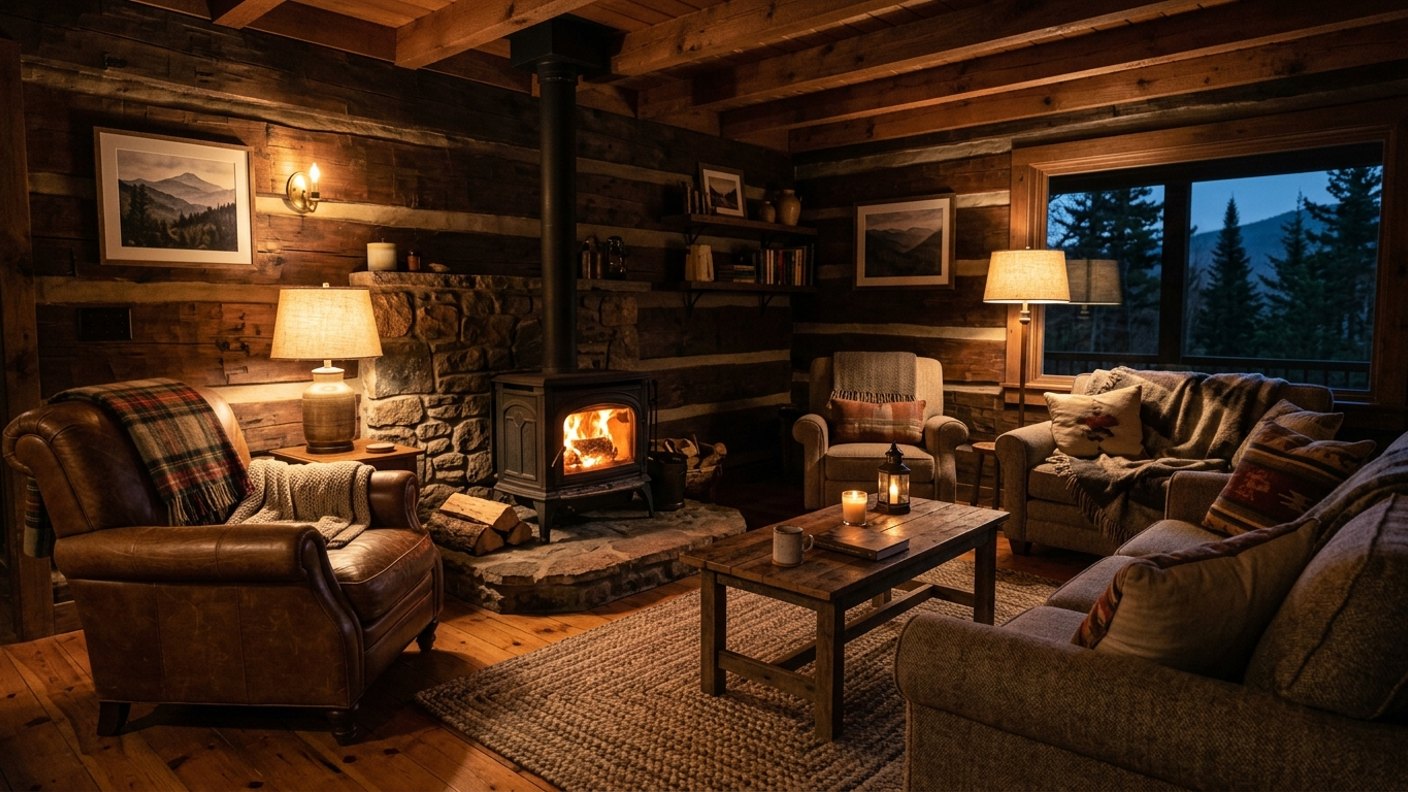
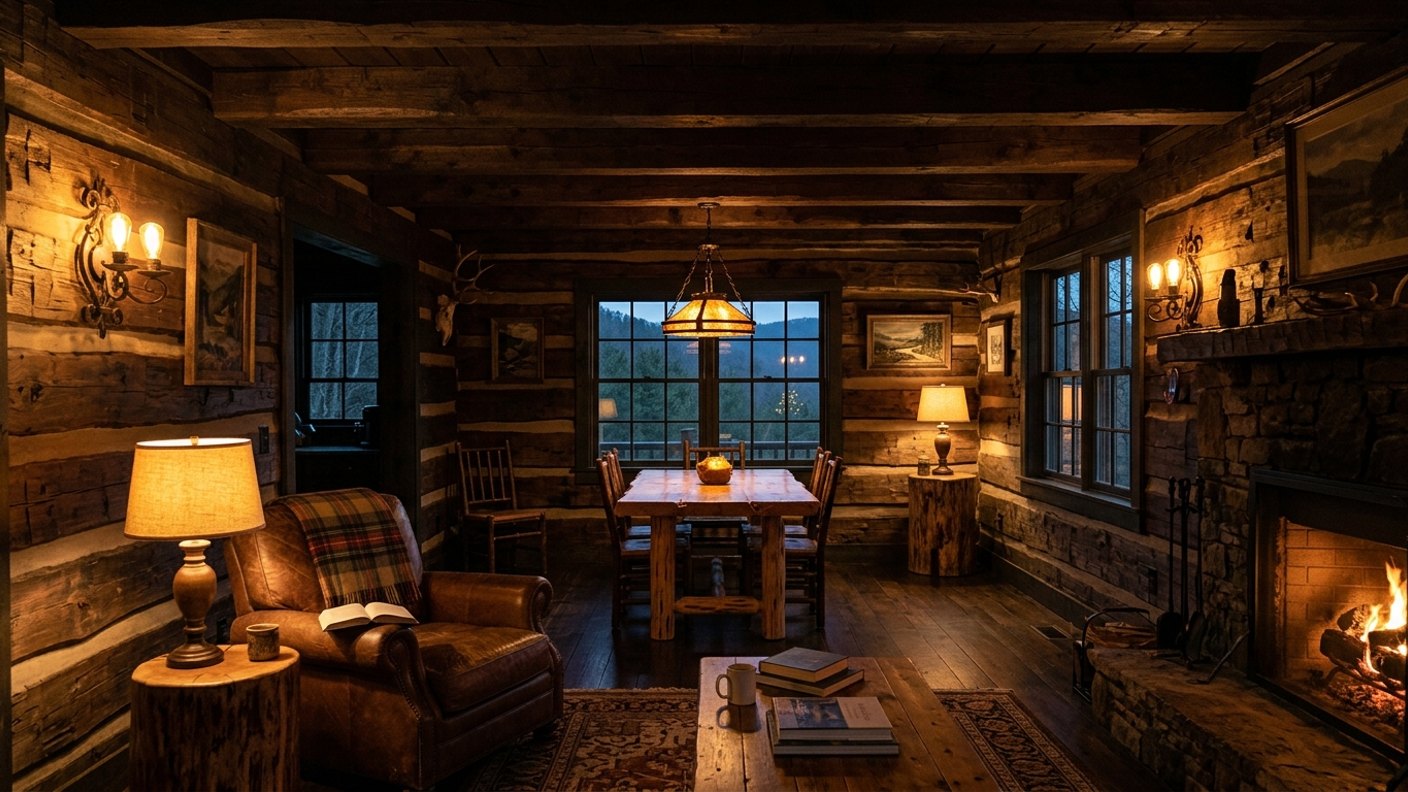
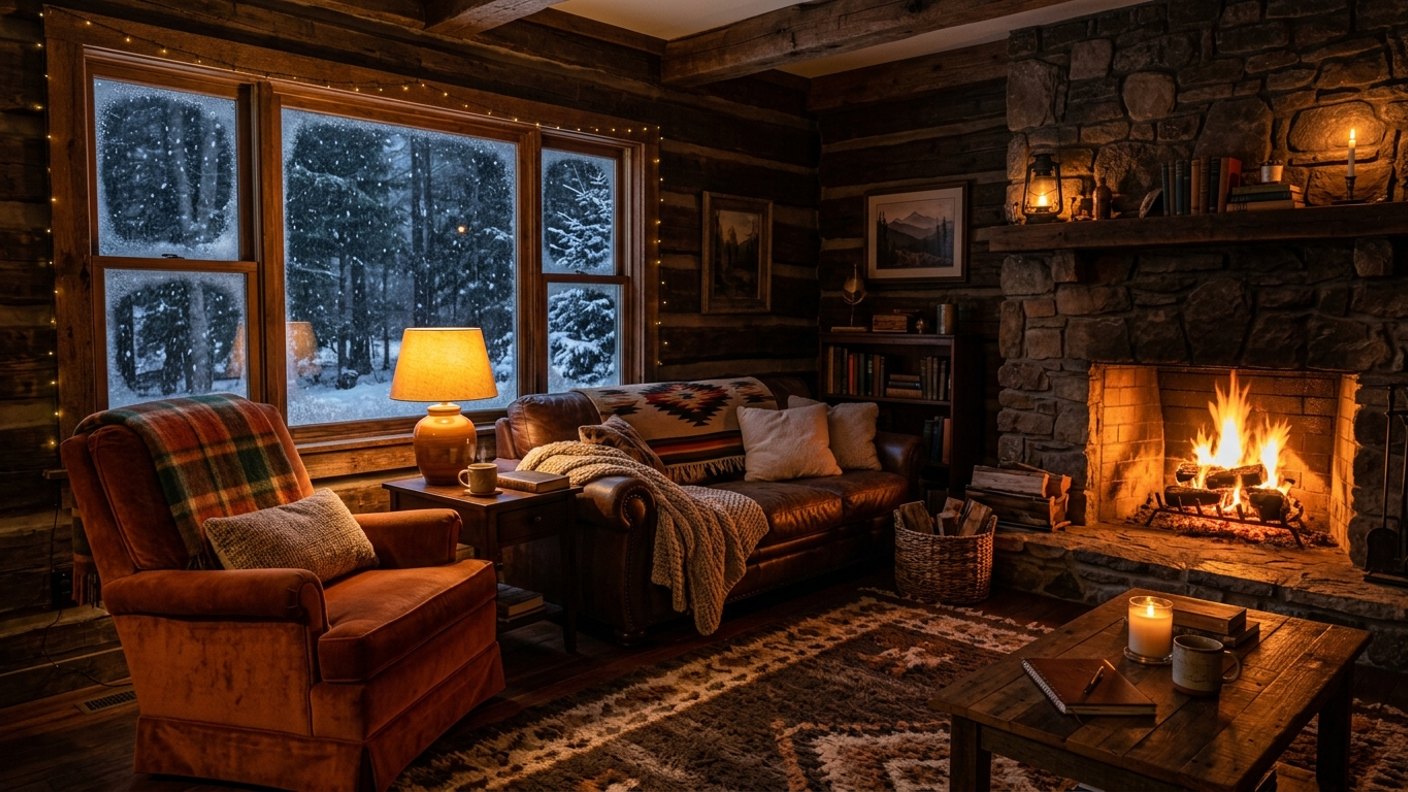
If I could only do one thing for coziness, it would be the lighting. Warm, low, layered light is the single biggest driver of how cozy a space feels. It makes wood and textures glow, fills shadows softly, and quietly signals rest. I use sconces and lamps at several low heights, all warm 2700K, never one cold overhead. In a cabin, where wood drinks light, warm layered lighting is the most important and most affordable coziness you can buy.
A Fire to Gather Around
A fire or wood stove is coziness in physical form, warmth you can feel, light that flickers, a focal point the whole room gathers toward. Nothing else engages so many senses at once or pulls people together so naturally. A cabin with a good fire going has a head start on cozy that nothing else quite matches. It's the literal and emotional heart of a cozy cabin, which is why I build every main room around one.
Texture You Can Feel
Coziness is tactile, so I layer natural textures you want to touch, wood, wool, leather, sheepskin, linen. The richer and more layered the textures, the more a cabin feels like it's wrapping around you. Smooth, hard, sparse spaces feel cold no matter how warm the air is; soft, layered, tactile ones feel cozy even before the fire's lit. Texture is coziness you can run your hand across.
A Warm, Earthy Palette
Colour sets the emotional temperature, and warm earthy tones, creams, browns, deep greens, rusts, charcoals, read as cozy where cool, stark colours read as cold. I keep a cabin's palette warm and drawn from nature, so the very colours of the room push toward comfort. The palette works hand in hand with the warm lighting; warm light on a warm palette is doubly cozy, where either alone is only half the effect.
Human Scale and Shelter
Part of coziness is the feeling of shelter, of being held by a space at a comfortable human scale. This is why small cabins are often cozier than big ones, and why I don't chase volume for its own sake. A snug, well-proportioned room that feels like a refuge beats a soaring, impressive, slightly cold one for coziness every time. Scale, if anything, favours the small and sheltering.
Engage All the Senses
The cabins that feel coziest engage every sense, warmth on the skin, soft light in the eye, the smell of woodsmoke or coffee, the texture of wool under your hands, the quiet or the crackle of the fire. Coziness is multisensory, which is why a real fire and real materials beat any purely visual styling. The more senses a cabin warmly engages, the deeper the coziness goes.
The Sum of It
So what makes a cabin cozy? Warm layered light, a fire, rich natural texture, a warm earthy palette, sheltering human scale, and a space that engages all the senses. None is exotic or expensive; together they create the feeling everyone wants and few can name. Coziness isn't magic. It's these ingredients, stacked. Build them in deliberately and any cabin, however small or simple, becomes the place nobody wants to leave.
Gear & lighting in this post: warm wall sconces and table lamps for the living room